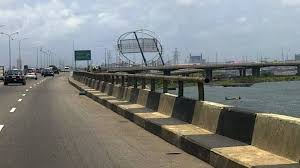
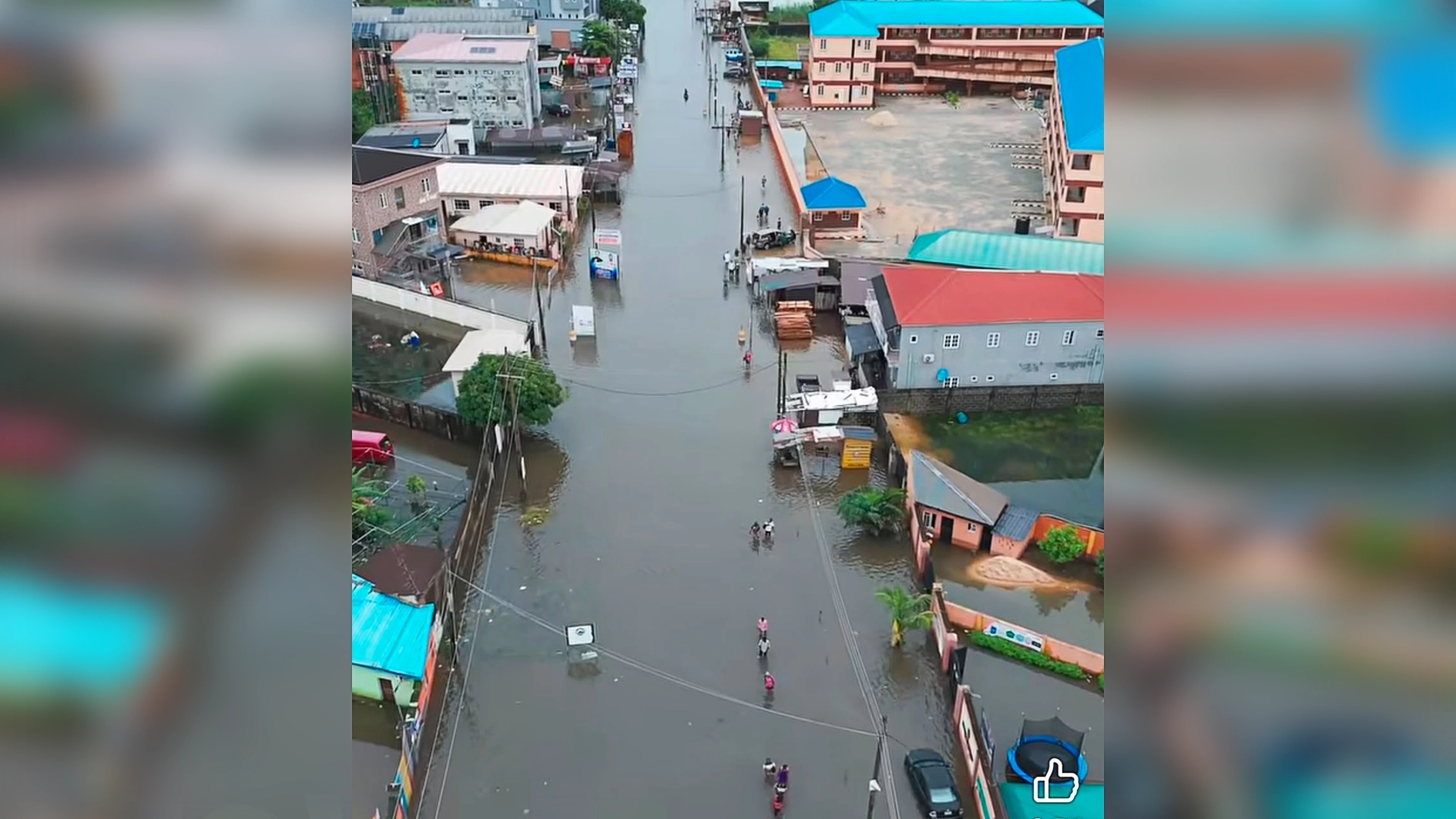
Heavy rainfall disrupted movement across parts of Abuja on Saturday as floodwaters swept through major roads and residential areas, leaving motorists stranded and forcing some businesses to close. Several locations recorded severe flooding, including Adetokunbo Ademola Crescent in Wuse 2, the area around Delight Event Centre in Gudu and parts of Efab Estate in Lokogoma. The bridge linking Gaduwa and Durumi was also overwhelmed by floodwater, preventing motorists from crossing freely. Some vehicles were submerged or damaged by the rising water, while businesses in affected areas shut their doors as floodwaters encroached on their premises. A resident who captured the situation on the Ebeano-Gudu road in a video appealed to the Minister of the Federal Capital Territory to intervene and address the flooding. “Dear Honourable Minister of the FCT, please come to our rescue. This is the current situation of Ebeano/Gudu Road. The bridge is flooded,” the resident said. The resident added, “People coming from Gudu junction can’t cross, people coming from Ebeano can’t get to Gudu. Mr Project, please come and help us.” The flooding effectively disrupted movement between Ebeano and Gudu, while motorists and residents were forced to seek alternative routes as water covered the road and connecting bridge. The incident has also renewed questions about the effectiveness of flood-control measures and drainage infrastructure in Abuja, particularly amid concerns over the significant public funds allocated to address ecological challenges. Daily Trust had previously reported that more than N109.5 billion had been released from Nigeria’s Ecological Fund in three years, even as fears of flooding continued to affect communities ahead of the 2026 rainy season. Figures obtained from the Office of the Accountant-General of the Federation showed that between July 2023 and December 2025, a total of N109,516,046,114.35 was disbursed to tackle ecological challenges, particularly flooding. The funds were disbursed to sub-national governments, including the Federal Capital Territory, amid the need to strengthen flood-control measures, improve drainage systems and address other environmental challenges. However, despite the billions of naira released, flooding has continued to disrupt communities, damage property and paralyse movement in parts of Abuja. The latest incident comes against the backdrop of warnings by the Nigeria Meteorological Agency about the risk of flooding during the 2026 rainy season. The Nigeria Hydrological Services Agency also warned that flooding could worsen between August and September. The FCT was among the areas identified as facing a high flood risk, with the Annual Flood Outlook listing Abuja as vulnerable to flash flooding. The Federal Government has urged Nigerians to prepare for possible flooding, warning that climate change is increasing the frequency and intensity of heavy rainfall, which can overwhelm drainage infrastructure. Saturday’s flooding has consequently intensified concerns over whether existing flood-prevention measures are adequate to protect Abuja residents, motorists and businesses, especially as the rainy season enters its peak period.
Don't miss out on breaking stories and in-depth articles.