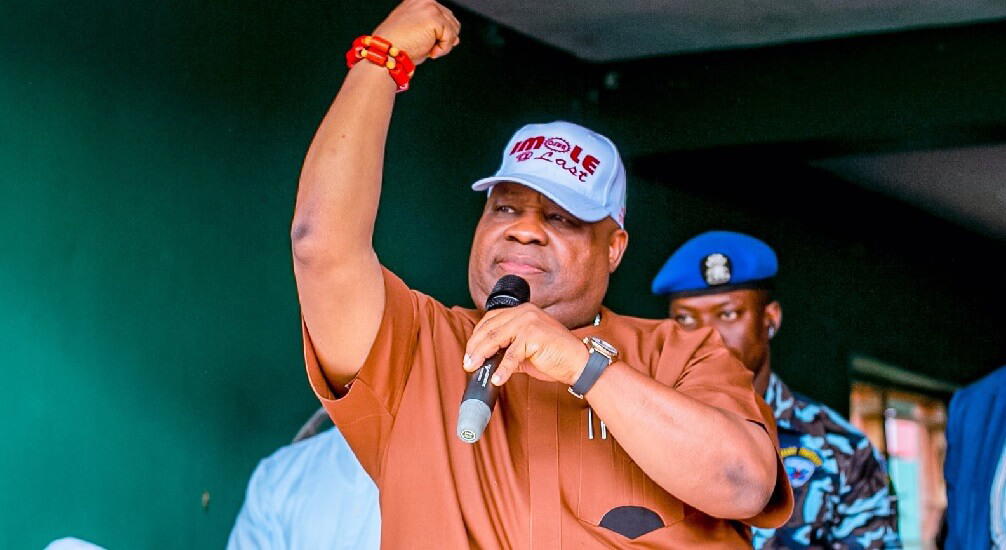
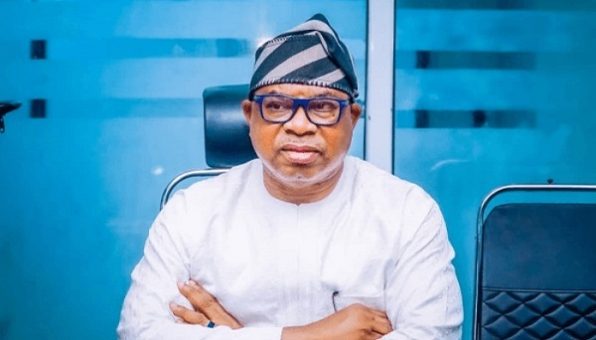
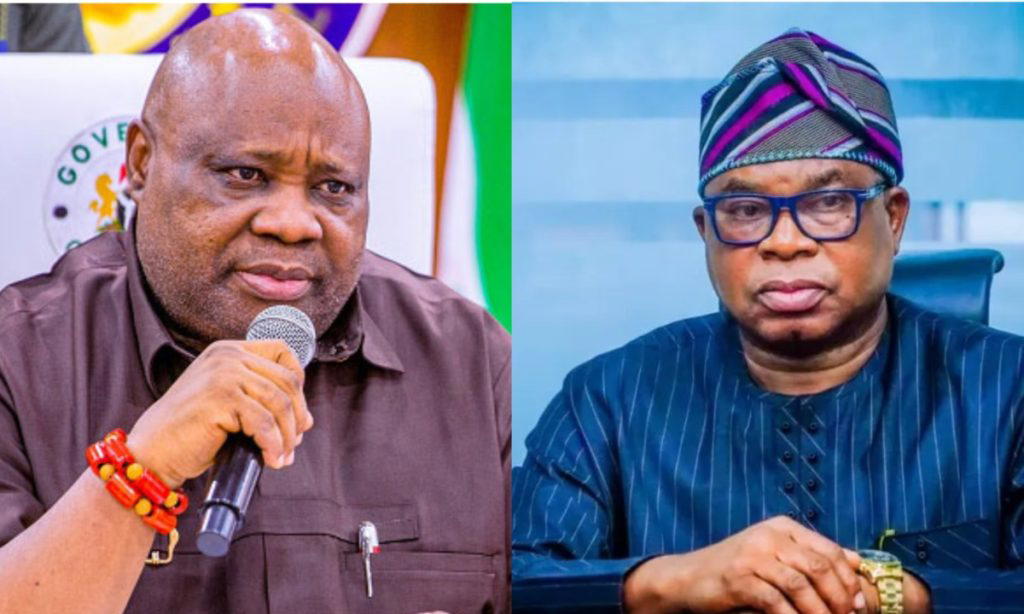
For the All Progressives Congress (APC), the 2026 Osun governorship election was supposed to be a carefully prepared rematch. Four years after losing the state to Ademola Adeleke, the party returned with a new candidate, Bola Oyebamiji. His candidature had the backing of the federal government and a campaign that connected heavily on the influence of President Bola Ahmed Tinubu who many claimed originally hailed from the state and the APC’s national political structure. But when the Independent National Electoral Commission (INEC) concluded the collation on Sunday, Adeleke had not only retained the state but widened the gap. The Accord Party candidate polled 511,067 votes against Oyebamiji’s 444,815, winning by 66,252 votes. Adeleke won 19 of the state’s 30 local government areas, while Oyebamiji won 11. The result raises a question that goes beyond the performance of the APC candidate. It questioned why the ruling party fail to convert its considerable political advantages into victory? The answer appears to lie in a combination of internal party dynamics, the politics of federal intervention, Adeleke’s incumbency, his campaign strategy and the peculiar political character of Osun voters among several other factors. EFCC’s own goal Perhaps the most politically consequential development in the final stretch of the campaign was the freezing of accounts belonging to the Osun State Government by the Economic and Financial Crimes Commission (EFCC). The commission said the action was connected to an investigation into alleged financial irregularities and denied that it was politically motivated. From a purely institutional perspective, the EFCC had the right to investigate suspected financial wrongdoing. But elections are rarely fought on institutional explanations alone. They are fought on perceptions. Politically, the optics were damaging. The timing of the action gave Adeleke a potent campaign narrative that his administration was being targeted by the federal establishment controlled by the APC. The directive by President Tinubu to the EFCC to unfreeze the account did little to change the perception. APC’s unresolved primary wounds The party also carried the baggage of its governorship selection process. In December 2025, APC disqualified several aspirants. The party spent a significant part of the campaign period managing tensions created by the process through which its candidate emerged. The question is whether the eventual reconciliation was enough to restore the kind of deep grassroots cohesion required to defeat an incumbent. However the election result suggests that APC’s reconciliation, while visible at the leadership level, did not translate into sufficient statewide advantage. The federal might paradox The APC also faced an unexpected problem with one of its biggest assets, federal power. The party’s national campaign structure brought prominent politicians into Osun, underlining the importance attached to the election. Its campaign was backed by the political weight of the Tinubu administration. Ordinarily, such backing should strengthen a governorship candidate. But in Osun, it created a counter narrative. Adeleke had spent considerable time portraying the election as a contest in which the state must resist external pressure. The more the contest became associated with Abuja and national APC figures, the easier it became for the incumbent to personalise the election as a battle between himself and the federal establishment. This was particularly potent when combined with the EFCC controversy. Adeleke also entered the contest with something Oyebamiji could not manufacture, which is a four year record in office. He had projects to commission, policies to defend and relationships with communities and traditional institutions to showcase. In the months leading to the election, the governor commissioned and flagged off several infrastructure projects. The Adeleke political machine Aside from government projects, Adeleke benefited from a political structure that predates his current administration. His family has been a major force in Osun politics for years, while Adeleke himself had already contested the governorship in 2018 before winning in 2022. The 2026 election therefore represented his third serious statewide governorship contest. He was thus familiar with the state’s political geography, knew the strengths of his opponents and had spent years building relationships with political actors and voters. Adeleke did not simply win his traditional Ede base. He won 19 LGAs, including major centres such as Osogbo, Ede North, Ede South, Iwo, Ife East and Ife Central. In Ede North, his home base, Adeleke scored 35,427 votes against Oyebamiji’s 10,283. He also secured 36,480 votes in Osogbo, compared with Oyebamiji’s 30,474. Davido amplified the Adeleke brand Davido’s involvement was another unusual advantage. The global music star’s participation gave Adeleke’s camp
Don't miss out on breaking stories and in-depth articles.