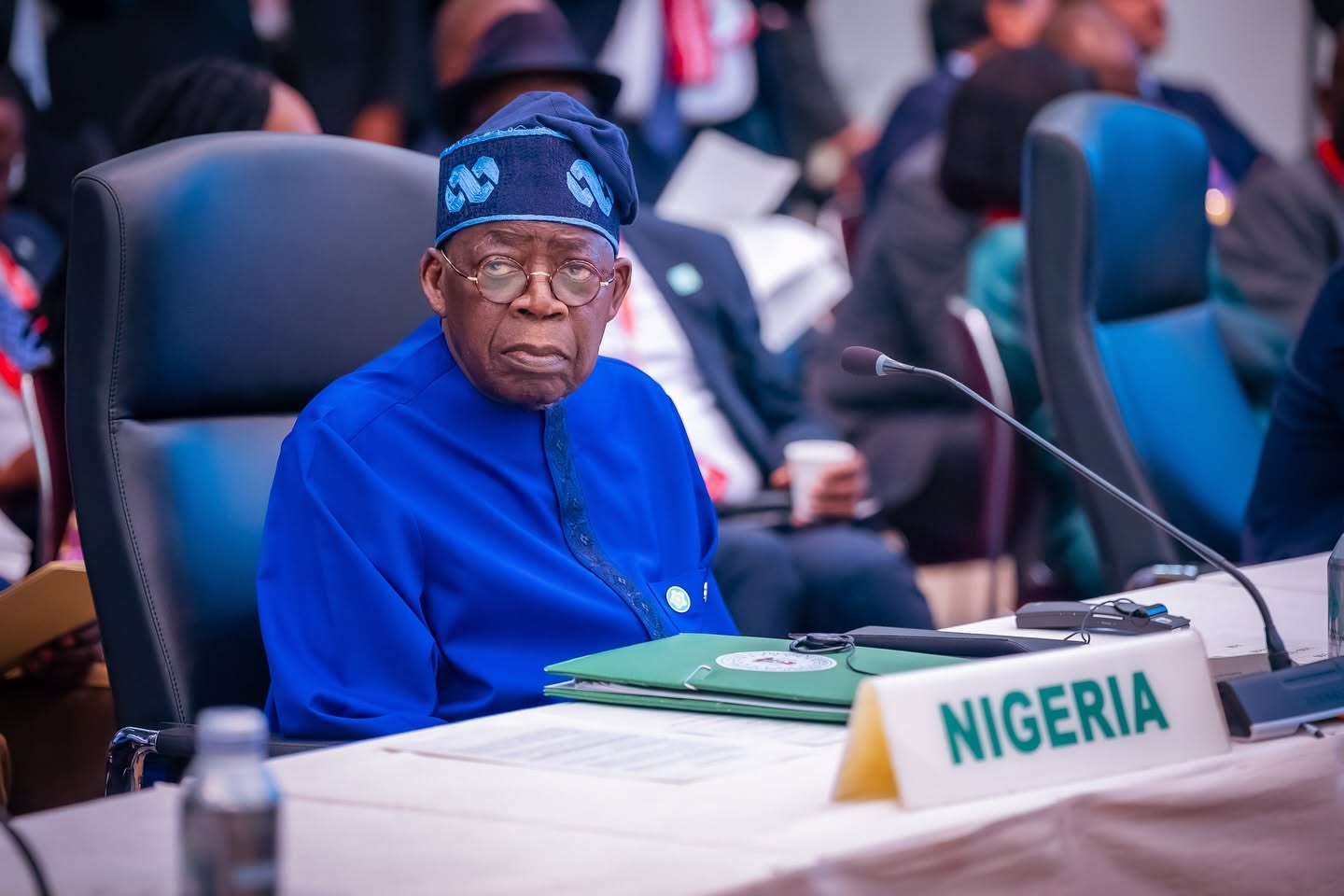
By Moshood Oshunfurewa There is a certain tragedy in watching a nation articulate its own contradictions in public. On one hand, the Debt Management Office tells us Nigeria’s total public debt stood at N159.35 trillion as of March 2026. On the other, the Federal Government insists that borrowings under President Bola Tinubu are “nowhere near” the N80 trillion being bandied about by commentators. The diagnosis is correct – Nigeria has a debt problem. The prescription, however, is the same old evasion: blame the naira, blame accounting adjustments, blame everyone except the architects of this fiscal catastrophe. Between December 2025 and March 2026, Nigeria’s total public debt remained almost static at about N159 trillion. But the composition changed. Domestic debt increased by N2.55 trillion to N87.40 trillion, while external debt declined in naira terms by N2.48 trillion. The government would have us believe this is progress, less foreign borrowing, more domestic borrowing. But this is not a victory; it is a redistribution of the same poison. Domestic debt now accounts for 54.85 percent of the total portfolio. Every naira the government borrows domestically is a naira that Nigerian banks cannot lend to manufacturers or small businesses. We are cannibalising our own private sector to feed a government that cannot stop spending what it does not have. The question is not whether Nigeria can afford to stop borrowing. The question is what the borrowed money is used for. And here, the answer is damning. In the first nine months of 2025, the Tinubu government borrowed N11.89 trillion, exceeding its own planned borrowing target of N10.34 trillion by approximately N1.54 trillion. Of that staggering sum, only N3.10 trillion was allocated to capital expenditure, a mere 17.66 percent of the N17.58 trillion earmarked for capital projects. This means 82.34 percent of planned capital expenditure went unfunded. Nigerians are right to ask: where did the balance go? Was it deployed for recurrent expenditure? For the entertainment of guests at Aso Rock? Transferred to the Renewed Hope Agenda 2027 election campaign fund? The government has offered no explanation. Silence, in this context, is not golden. It is complicity. Borrowing is not inherently destructive. If the money builds roads, power projects, agricultural infrastructure and other assets that help the economy grow, borrowing can be useful. But we are borrowing to survive, not to build. Debt servicing swallowed 67 percent of federal revenue in the first nine months of 2025. For every N100 earned by the government, over N67 went to creditors. President Tinubu himself disclosed that Nigeria will spend approximately $11.6 billion servicing debt in 2026, nearly half of the country’s projected revenue for the entire year. This is not development financing. This is deferred poverty. And yet, despite these numbers, the government continues to borrow as if there is no tomorrow. On March 31, 2026, President Tinubu sent a letter to the National Assembly asking for permission to borrow $6 billion from abroad. The request arrived wrapped in the usual language of fiscal responsibility and infrastructure priorities. Lawmakers will debate it, amend a clause or two, and approve it. This is how it always goes. What the letter did not say, because no government letter ever says it, is that Nigeria’s total public debt had just crossed N159 trillion. Or that four years earlier, the entire debt stock was N33.13 trillion. In four years, the number grew by 380 percent. Not 38 percent. Not 138 percent. Three hundred and eighty percent. The tragedy deepens when we consider the scale of waste and corruption that accompanies this borrowing. The Peoples Redemption Party has accused the government of mismanaging borrowed funds, alleging that many loans are diverted through corruption and a lack of accountability. Rather than improving infrastructure or boosting social investments, funds are often funnelled into frivolous projects and opaque contracts. Nigeria loses approximately $18 billion annually to procurement fraud, equivalent to 3.8 percent of its GDP. The EFCC and the Bureau of Public Procurement have both stated that over 90 percent of corruption perpetrated in Nigeria is through procurement. This is not a leak; it is a flood. The government’s response to criticism has been characteristically evasive. When reports emerged that the Tinubu administration had borrowed about N80 trillion in three years, the finance minister, Mr. Taiwo Oyedele, dismissed the figure as exaggerated, blaming naira depreciation and accounting adjustments. The depreciation of the naira, we are told, added more than N40 trillion to the debt stock without any new borrowing. This is a convenient fiction. Even if we accept this accounting sleight of hand, the reality remains: Nigeria is deeper in debt than at any point in its history, and the quality of life for ordina
Don't miss out on breaking stories and in-depth articles.