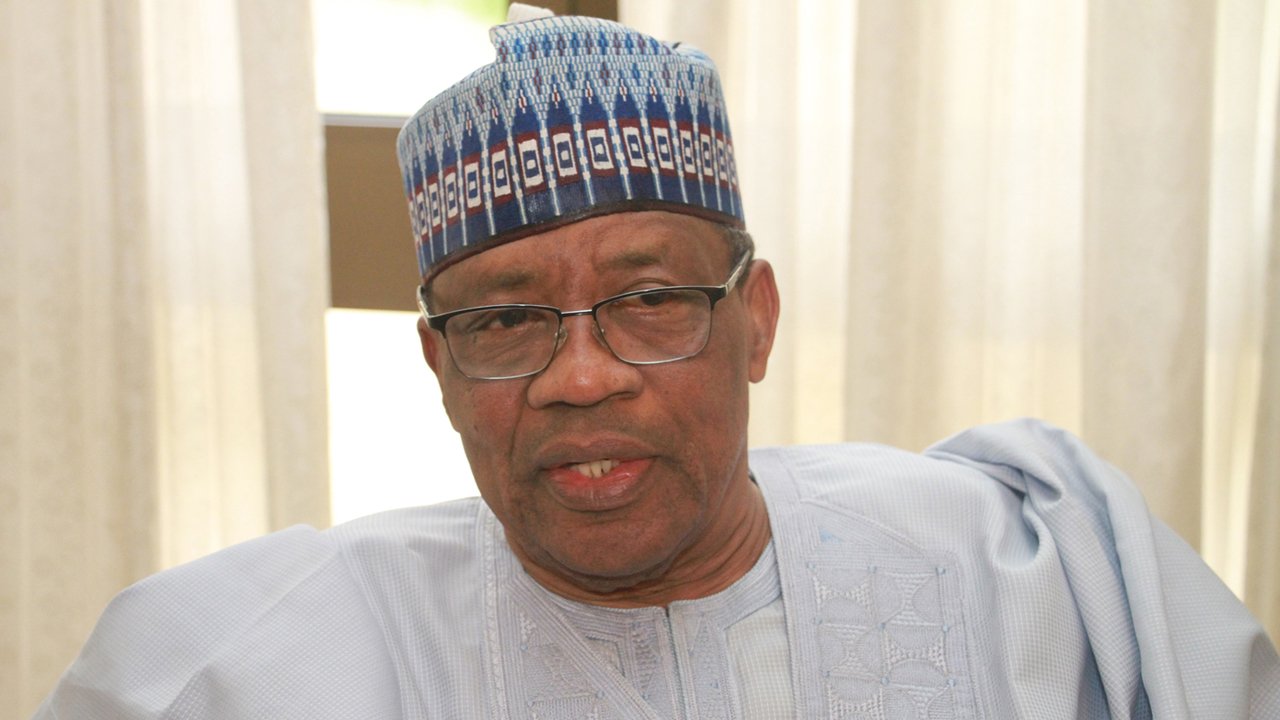
By Kingsley Moghalu “I was very surprised,” my friend said over the phone, “to see your endorsement of General Ibrahim Babangida’s autobiography—and on the front cover, no less.” “And why are you surprised?” I asked. “I thought you were a democrat,” he replied heatedly. “This man was a military dictator!” He then launched into the June 12 debacle: the annulment of the 1993 presidential election results and the truncation of the military government’s own transition programme. I smiled. “Babangida led Nigeria for several years at a time when military rule was the fashion across Africa and democracy the exception. He must be judged, as must all the uniformed leaders of that era, in that historical context. More importantly, if you have read the book you would have seen that IBB expressed deep regret for truncating the democratic transition in 1993 and accepted full responsibility. Looking backwards, he wrote, he was wrong and should have acted differently.” Babangida’s memoir is important for our country’s historical accounting, and I was honored to respond positively to the former military leader’s invitation to comment on it. Keen historians and students of history will surely appreciate that within the span of 18 months, three former military rulers including IBB have published their memoirs. Memoirs, like leadership, are not necessarily popularity contests. They are recollections plus perspective. IBB used the opportunity of his own memoir to complete the historical accounting for his part of our national story with finality and clarity. It was a good thing that he confronted the challenge head-on. Time is a great healer of wounds and a master contractor in supplying new perspectives on historical narratives. Importantly, Babangida also had the courage to correct the erroneous impression that the January 1966 coup—the first in the country’s history—was an “Igbo coup,” a narrative that went beyond individual responsibility to assign collective ethnic guilt for the first of several tragic events that year. As General Ibrahim Badamasi Babangida (Rtd), GCFR, turns 85, the 1993 election annulment remains an inevitable aspect of his legacy. Having dealt with it — and the January 1966 coup — he should be at peace with himself. His legacy, however, encompasses far more. With the sad exception of Gen. Johnson-Thomas Aguiyi-Ironsi, Nigeria’s first military Head of State, Nigeria’s former military rulers have all enjoyed long lives. Former President Muhammadu Buhari, also a former military ruler, passed on more recently at 82. There are three reasons why this longevity is a blessing. First, it has afforded them a golden opportunity to reflect on their times in power and on what they did right or wrong. Writing a memoir is only part of that process; memoirs can sometimes serve self-justification more than unflinching self-assessment and can leave important questions unaddressed. I believe IBB’s memoir passed the test of honest self-examination. Second, a long life has enabled these elder statesmen to enjoy the immense prestige that accompanies being a former Head of State or Government—a satisfaction that runs deep in human psychology. Third, and perhaps most important in our contemporary context, longevity has given them all, IBB included, the chance to observe first-hand the undebatable decline of the Nigerian state over the past several decades, a decline that accelerated in the past ten years. Remember that these ex-generals seized and exercised power in their thirties and forties. They have now spent decades as former leaders. Remember, too, that they made huge sacrifices—as did many other compatriots—to “keep Nigeria one” through the civil war of 1967–1970. It is important to assess the state of the Nigerian state itself: How far have we come? Is Nigeria truly one today? Does a country exist simply for the sake of existence and mere survival? Or does it exist to thrive—with consistent, measurable progress toward genuine nationhood, unity of purpose, and citizens who are steadily better off and “flourishing,” measured by GDP per capita rather than the anaemic GDP growth numbers I have called “the Fallacy of Economic Man”? Babangida, with his sharp strategic mind—and with shrapnel from the scars of battle still lodged in his body—will doubtless be ruminating over these deep questions. Or at least he should. The burden is not his alone. He belongs to a historical cohort of men who had the rare opportunity to govern and to move the country forward. IBB was unique as a military ruler in several respects. He catalysed development and governance through deliberate political engineering. He possessed bold, futuristic ideas—such as the two-party system he decreed, one “a little to the left” and the other “a little to the right,” in a country that stood mainly on an ethnic tripod and therefore needed
Don't miss out on breaking stories and in-depth articles.