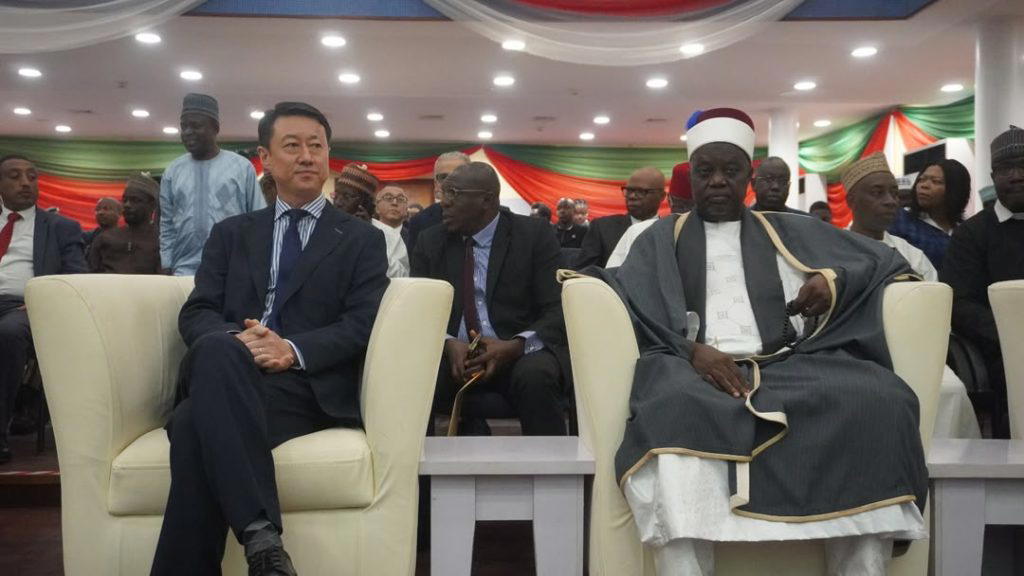
Michael Olugbode in Abuja Nigeria risks squandering a potentially transformative opening in the Chinese market unless it urgently fixes its production, processing and export capacity, stakeholders warned on Friday as China’s new zero-tariff regime opened a fresh $18 billion trade window between both countries. The warning came against the backdrop of China’s decision to remove tariffs on imports from African countries with diplomatic relations with Beijing, a move that Nigerian officials and trade experts said could dramatically expand the country’s access to one of the world’s largest consumer markets. Chinese Ambassador to Nigeria, Yu Dunhai, disclosed in Abuja that bilateral trade between Nigeria and China reached $18 billion in the first half of 2026, while Chinese imports from Nigeria jumped by 80 per cent to $2.3 billion following the implementation of the zero-tariff policy on May 1. But rather than celebrate the figures, speakers at an international seminar on the policy challenged Nigeria to confront the structural weaknesses that could prevent the country from turning preferential access into sustained export earnings, industrial growth and jobs. The seminar, organised by the Centre for China Studies, brought together senior government officials, lawmakers, diplomats, manufacturers, farmers, exporters and academics to examine the implications of the Chinese initiative for Nigeria and Africa. The emerging consensus was stark: China has opened the door, but Nigeria must first produce what the Chinese market wants, in the required quantity and quality. Yu said the policy had already produced tangible benefits, with Nigeria recording significant savings on export tariffs. He cited Nigerian sesame exports, saying every 100 tonnes now saves about $11,000 in tariff costs, while the country’s annual export of 7,000 tonnes of cattle bone granules could save nearly $450,000. A single 23,000-tonne shipment of Nigerian liquefied propane, he added, saved approximately $300,000 in tax on the first day of the new regime. Yet, the ambassador made clear that tariff elimination alone would not guarantee Nigerian success in the Chinese market. “Meeting Chinese market standards and ensuring reliable supply volumes are essential for long-term success,” he said. He urged Nigerian producers to improve quality, strengthen supply chains and move beyond the export of unprocessed commodities. China, he said, was prepared to support Nigeria with technology, equipment and technical expertise, including partnerships for industrial parks and local processing. The Director of the Centre for China Studies, Charles Onunaiju, delivered perhaps the strongest warning of the day, saying the preferential access could become another missed opportunity if Nigeria failed to reform its production and trade systems. “Zero-tariff treatment for products coming from Africa is only the starting point, it’s not the finish line,” he said. For Nigeria, the challenge is particularly significant because the country has repeatedly struggled to translate preferential access to foreign markets into large-scale export growth. Onunaiju said African countries must address structural constraints, harmonise standards, improve customs procedures and strengthen regional integration under the African Continental Free Trade Area. He argued that the Chinese initiative could provide Africa with the opportunity to become a major global manufacturing base, but only if countries build productive capacity rather than remain suppliers of raw materials. “The opportunity of becoming the next workshop of the world is in Africa,” he said. The federal government also used the forum to push its industrialisation agenda, insisting that Nigeria must stop treating the export of raw materials as the end point of economic activity. The Permanent Secretary, Ministry of Foreign Affairs, Ambassador Dunoma Ahmed, said Nigeria’s central question should not simply be how much it could sell to China but how much value it could retain domestically. “Our natural resources must become the starting point, not the end point, of economic activity,” he said. He called for crude oil to feed petrochemical and downstream industries, agricultural commodities to support agro-processing and manufacturing, and solid minerals to drive mineral processing and industrial production. “In other words, we must transition from exporting resources to exporting value,” he said. Ahmed said Nigeria was seeking Chinese and other international investments that would produce factories, processing plants, technology centres, logistics networks and skilled employment. For Nigeria, agriculture could become the biggest test of whether th
Don't miss out on breaking stories and in-depth articles.