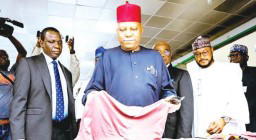
***MAN cautions against blanket restrictions ***Textile manufacturers demand stronger protection By Yinka Kolawole Nigeria’s dependence on imported textile materials has almost tripled with importation surging by 181 per cent in two years to N1.08 trillion in 2025 from N377.47 billion in 2023, despite repeated efforts to revive the oncethriving local textile industry. Latest data from the National Bureau of Statistics, NBS, also indicates further rise in import bills in 2026 as first quarter (Q1’26) figure already shows faster upswing to N267.7 billion, about 153.2 percent higher than the N70.48 billion recorded in the corresponding period of last year. Breakdown of data from the NBS shows that textile imports have recorded consistent growth over the period, underscoring the country’s growing reliance on foreign fabrics and the continued decline of domestic textile manufacturing. The data showed that textile imports rose by 92.4 per cent to N726.18 billion in 2024 from N377.47 billion in 2023 before climbing by another 46 per cent to N1.08 trillion in 2025. Quarter-on-quarter, imports also increased by 17 per cent from N178.45 billion in Q1’24 and by 28.2 per cent from N228.83 billion in Q1’25. The trend has remained firmly upward in 2026 and forecast is looking at about N1.4 trillion by year end. The sharp increase in imports highlights the widening gap between domestic production and demand, as local manufacturers continue to contend with high production costs, inadequate power supply, foreign exchange pressures and other structural constraints. In contrast, Nigeria’s textile exports have continued to weaken, weakening the country’s balance of trade in the textile sector. Exports fell by 11.8 per cent to N16.55 billion in 2025 from N18.76 billion in 2023 and declined sharply by 55 per cent from N36.98 billion recorded in 2024, reflecting the country’s diminishing competitiveness in textile manufacturing. The widening gap between imports and exports has reignited debate over the future of the country’s textile industry, with policymakers and industry stakeholders divided over whether import restrictions alone can revive the sector. Senate pushes import ban Responding to the worsening fortunes of the industry, the Senate in June, 2026, adopted a resolution calling on the Federal Government to impose a total ban on textile imports. The motion was aimed at reviving the once-vibrant textile mills along the Kaduna-Kano industrial corridor and restoring Nigeria’s domestic textile manufacturing capacity. The Senate urged the Federal Government to immediately prohibit the importation of foreign fabrics and textile materials, noting that imported products currently account for about 99 per cent of the domestic market. It also directed the Ministry of Agriculture to promote largescale cotton farming as the foundation for rebuilding the textile value chain. In addition, the Senate called for increased intervention funding through the Bank of Industry, BoI, to revive distressed and closed textile factories and surveillance to curb widespread smuggling of textile products. Manufacturers react T h e Manufacturers Association of Nigeria, MAN, however, w a r n e d a g a i n s t rushing into a blanket import ban without first addressing the structural constraints facing local manufacturers. Director-General of MAN, Segun Ajayi-Kadir, said although Nigeria possesses the capacity to satisfy a significant share of domestic textile demand, legislation alone cannot revive the industry. According to him, the government must first demonstrate genuine commitment to patronising locally manufactured textiles while ensuring strict implementation of existing local content policies. He said: “For instance, are we going to enforce the patronage of made-in-Nigeria textiles within the government? When the National Assembly passed this resolution, how many of them were wearing made-in-Nigeria garments?” Ajayi-Kadir argued that any restriction on textile imports should be accompanied by effective implementation of Executive Order 003 and the Federal Government’s “Nigeria First” policy. According to him, the policy should compel government institutions, including the Presidency, National Assembly, military, Sustainable revival will require structural reforms that improve paramilitary organisations, uniformed agencies and public schools, to prioritise locally produced textile materials. He maintained that without guaranteed local patronage, improved competitiveness and consistent policy implementation, an import ban may fail to deliver the desired industrial revival. Tex t i l e manufacturers seek stronger protection On its part, the Nigeria Te x t i l e Manufacturers Association, NTMA, backed s t r onge r government protection for dome s t i c producers, insistin
Don't miss out on breaking stories and in-depth articles.