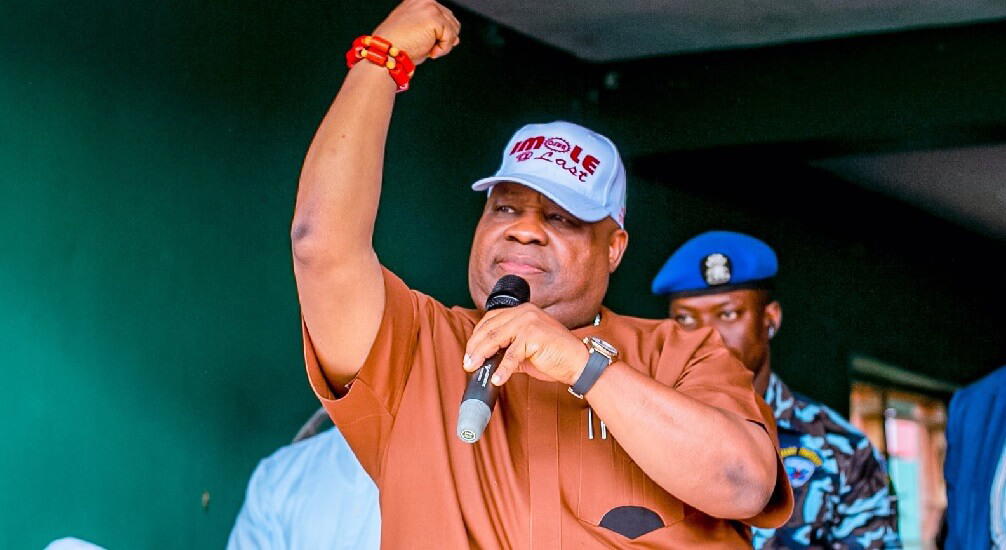
REUBEN ABATI The success of the Gubernatorial election held in Osun State on Saturday, August 15, 2026 had implications that went beyond the boundaries of the state. The lead up to the election had been marked by highly febrile conflict, violence and so much anxiety. Being the last major election to be conducted by the Independent National Electoral Commission (INEC), before the 2027 general, nationwide elections, it was a major litmus test for INEC’s preparedness, a dress and technical rehearsal, and the panic was by no measure small especially as 12 local governments out of the 30 local governments became killing fields. As the elections drew closer there was hardly a day without reports of thuggery, killings, mayhem and arrests. The ruling, incumbent Accord Party in the state, and the Governor’s campaign organization, the Imole Campaign Council consistently accused the All Progressives Congress (APC), the ruling party in Abuja, and its local agents – specifically the former Governor, and Minister of Marine and Blue Economy, Gboyega Oyetola, and also former Governor Olagunsoye Oyinlola of using Federal Might to intimidate and harass the Accord Party and its supporters in Osun State. The language of politics became violent. The Accord Party had to petition the Inspector General of Police to redeploy the State Commissioner of Police for turning the State Police Command into a branch of the APC. When IGP Tunji Disu eventually visited Osogbo for an on-the spot assessment, he told the state Governor that the report on his table was that the State Government House had become a hiding place for criminals in the state. That sounded really like the IGP referring to the Governor himself as a criminal – were it not for the immunity that he enjoys, he could have been arrested. But the IGP’s visit did not stop the spread of violence. At a point, over 70 election-related violent incidents were reported, with a total of about 30 deaths. The state was caught under a climate of fear. Observers were worried about the possibility of voter apathy, more so as some party chieftains such as Senator Francis Fadahunsi (APC, Osun East), Mr. Francis Eniade (APC), Hon Wole Oke, the APC Osun campaign Director-General, who accused the Accord Party of killing his nephew, Dele Ayegbo in Esa Oke, Obokun Local Government Area were at the centre of the allegations of violence. There were reciprocal accusations and the situation got worse. Tension has never been far from Osun elections. The stakes were high. The anxiety was legitimate. But now that the elections have come and gone, there is a palpable sense of relief across the nation that the worst did not happen. The police Headquarters had deployed over 15, 000 personnel, with a designated Commissioner of Police for the election, and an Assistant Inspector General of Police (AIG) at the Headquarters overseeing the process. The Police Service Commission also deployed a high-powered delegation to monitor the conduct of police officers. Other security agencies deployed over 10, 000. INEC recruited 30,000 ad hoc officials to man the polling units – 3, 763 units, 332 wards, over 2.3 million registered voters, 15 political parties vying for one seat – the Governorship. On the eve of the election, a joint military and para-military parade on the streets of Osogbo was so long and so intimidating, it seemed as if war was afoot. On Saturday, election day, the people were not discouraged, they trooped out en masse to vote, not because the President had called on them not to be afraid but because of the people’s own enthusiasm for democracy as well as resilience. Yiaga Africa, in its preliminary assessment put the turn-out figure between 42.5 – 44-8 % – an achievement of the August 15 election. INEC’s official figure is 43%. By 8.30 am 3, 556 of the polling units had opened for voting across the state: young persons – a major dynamic, women, the elderly and physically challenged persons all came out to have their say. They not only voted; they stayed behind to protect their votes Most members of the Middle Class were conspicuously absent. At the polling units were ordinary people, the educated class that is always very vocal was nowhere to be seen, the members hiding in the safety of their homes. This is a trend that must be discouraged. But there were other issues too. Vote buying was very rampant. Voter inducement was common. Some voters were given as much as N50, 000. Many of them collected money from more than one political party. It was alleged that top security officers also received between N2 m and N5 million in each of the local government areas. Vote buying is an assault on the right of the people to choose freely. The intimidation of voters before or during an election is a major offence that should be taken seriously. There were glitches at some of the polling units. In Ife Central, Ilare IV/PU 016, Akodi Apeejiogo, the thumbprint pad was faul
Don't miss out on breaking stories and in-depth articles.