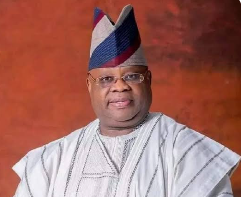
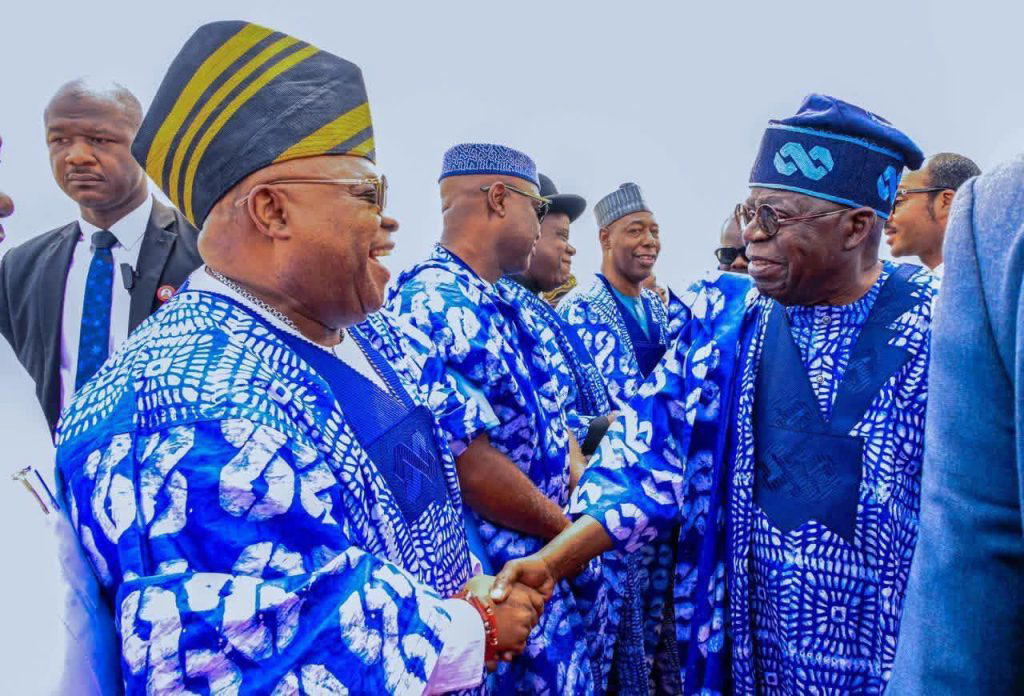
Ahead of the 2027 general elections, Governor Monday Okpebholo of Edo State appears to have emerged as a self-confident voice within the All Progressives Congress, projecting himself as a dependable ally capable of delivering as many as 2.5 million votes for President Bola Tinubu. But, from all indications, the figure appears more a political aspiration than a realistic projection—one that risks distorting strategic planning at the national level. Iyobosa Uwugiaren writes. On a rain-soaked morning along the Benin–Sapele–Warri highway, a commercial driver, Osaze Omoruyi–living in Ologbo community, sat beside his broken-down bus, watching passengers trek through the mud while waiting for a mechanic who might not arrive until evening. “Governor Monday Okpebholo is bragging about 2.5 million votes for Tinubu; we will wait and see in 2027,” he muttered. “It is this road that will decide how I will vote.” That frustration, repeated across Edo’s highways, including the Agbor–Abavo–Urhonigbe–Abraka Road and other communities, captures the gap between political projections and everyday realities in the state. In the unfolding political calculations ahead of the 2027 general elections, Governor Okpebholo has emerged as a self-confident voice within the ruling All Progressives Congress (APC), projecting and positing himself as a dependable ally capable of delivering as many as 2.5 million votes for President Bola Tinubu. The claim, though politically energising within party circles, is already generating quiet debate among analysts who warn that such optimism may not reflect Edo State’s electoral realities. For them, the figure is less a forecast than a political aspiration—one that risks distorting strategic planning at the national level. At the heart of the concern is a simple but critical question: can Edo State, based on its voting history, infrastructure challenges, wide perceptions of marginalisation and political behaviour, realistically produce such a dramatic electoral swing? Not many political analysts would dispute that the arithmetic behind the 2.5 million-vote projection immediately raises eyebrows. To be sure, in the 2023 presidential election, Edo State had 2,501,081 registered voters. Yet only 603,894 were accredited, with 600,395 votes cast. The Labour Party’s Peter Obi dominated the state with 331,163 votes, while Tinubu of the APC polled 144,471 votes and Atiku Abubakar of the PDP secured 89,585. The implication is stark: the entire registered voter base in 2023 is almost equivalent to the number of votes now being projected for a single candidate in 2027. For political observers, this is not merely ambitious; it is unprecedented. Even if voter registration increases and turnout improves, analysts have argued that expecting a near-total political conversion of the electorate would require a level of mobilisation Edo State has never witnessed in a presidential contest. Such an expectation, they contend, is unrealistic. The 2023 outcome further complicates optimism. Obi won 12 of the state’s 18 local government areas, leaving the APC with six. For Tinubu to rise from 144,000 votes to anything close to 2.5 million would require not just incremental gains, but a sweeping political realignment. Governor Okpebholo’s supporters have pointed to his control of the state’s political machinery, and his 2024 governorship victory—later affirmed by the Supreme Court in July 2025—as evidence of strong grassroots influence. But Edo’s electoral history tells a more nuanced story. The 2023 presidential election demonstrated that voters in the state, especially in the Edo South Senatorial District, are capable of separating state-level leadership from national preference. While the APC maintained a presence in 2023 general election, it failed to translate that into a presidential victory. Political analysts have argued that this distinction is crucial. Governorship elections are often shaped by local dynamics, personalities and state-level issues, while presidential elections are influenced by national sentiment, economic conditions, and broader political alignments. As one analyst put it, “winning a state does not automatically mean owning its presidential vote.” Beyond party structures and electoral arithmetic lies a more grounded issue: infrastructure. Across Edo State, major federal highways linking Benin to Warri, Auchi, Ekpoma, Uromi, Agbor and other communities have long been sources of the people’s frustration. Motorists routinely complain of potholes, delays, vehicle damage, and rising transport costs. Other affected routes include the Sakpoba–Ugo–Abraka Road, which has become increasingly dilapidated, creating security concerns along the route. Several travelers have been kidnapped on the road. On th
Don't miss out on breaking stories and in-depth articles.