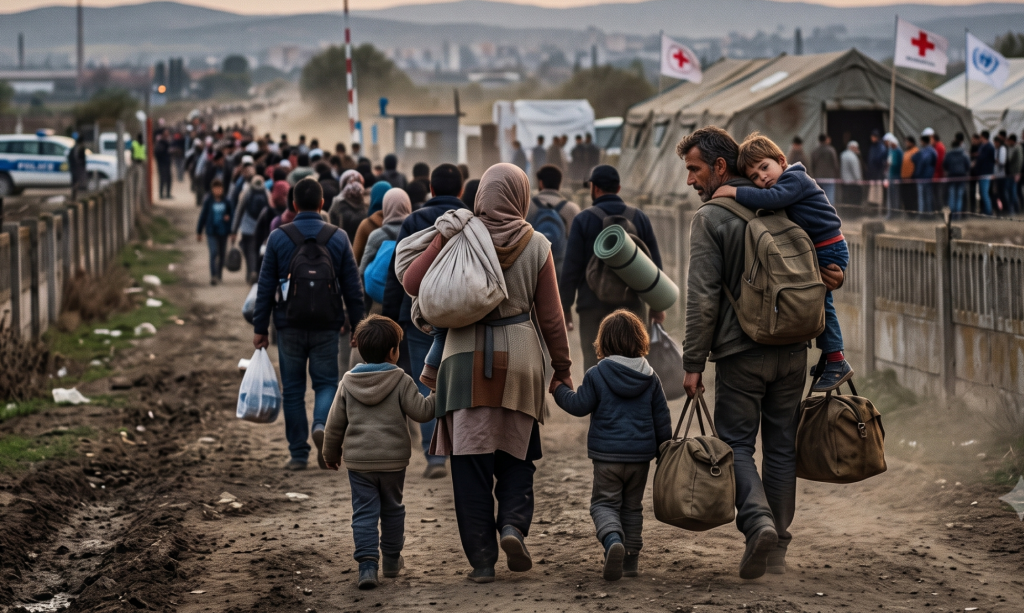
We must protect workers committed to alleviating the sufferings of vulnerable communities While the World Humanitarian Day (WHD) 2026 being celebrated today is dedicated to honouring humanitarian workers and celebrating their incredible impact around the world, we must, as a nation, remember the people who have either been killed or injured in the course of serving the most vulnerable of our society. With the campaign theme of ‘Act for Humanity’, the focus for this year is on how to demand an end to attacks on aid workers and health personnel, while fighting the impunity of violations against International Humanitarian Law that are all too common in Nigeria. On a day such as this, critical stakeholders should be concerned that the World Health Organisation (WHO) has listed Nigeria among countries where attacks on healthcare workers and facilities have been recorded over the past eight years, while disclosing that more than 10,400 such incidents have been reported globally since 2018. In its latest update published last weekend, the UN health agency listed Nigeria alongside Ukraine, Lebanon, the occupied Palestinian territory, Myanmar, Iran, Sudan, the Democratic Republic of the Congo (DRC), South Sudan, Russia and Syria among locations where attacks on healthcare workers had occurred this year. These attacks, according to WHO, could leave patients without treatment, prevent ambulances from making referrals, keep healthcare workers away from work, and disrupt the delivery of medicines and other supplies. “When a hospital is attacked, the impact is not only on the people inside the hospital that day. It is the patient who cannot receive healthcare tomorrow. It is the ambulance that cannot make the next referral. It is the healthcare worker who cannot return to work, or medicine supply that can no longer reach facilities,” WHO Director for Humanitarian and Disaster Management, Altaf Musani, said. “Behind every damaged facility is a service lost. Behind every interrupted service is someone who will be left without healthcare.” Only last week, the Nigerian Association of Resident Doctors (NARD) raised concerns over the safety and welfare of their members, while disclosing that no fewer than 30 doctors were assaulted across the country in the past 11 months. The assaults, according to NARD’s Second Vice-President, Kwarshak Kevin, were allegedly carried out by patients’ relatives and, in some cases, security personnel while doctors were attending to patients. Kevin called on the federal government to enact legislation prescribing penalties for anyone who assaults healthcare workers in the course of their duties. He also urged the establishment of a standard rapid-response protocol to enhance the protection of medical personnel. In 2009, the United Nations General Assembly designated 19th August as WHD in honour of the 22 aid workers, including the UN’s top envoy in Iraq, Sergio Vieira de Mello, who were killed on 19th August 2003 when a truck bomb hit the Canal Hotel in Baghdad. But the WHD assumes a greater importance in Nigeria following the 26 August 2011 bombing of the UN Building in Abuja which claimed the lives of 18 people with dozens of others wounded. From the attack on polio vaccination teams in Kano which killed female health workers to the abduction and execution of two International Committee of the Red Cross (ICRC) in Borno State and several others, humanitarian work in our country has in recent years been a risky job. As Nigeria therefore joins other countries to mark the 2026 WHD, authorities, at all levels, and critical stakeholders must work together to ensure that those who strive to alleviate the sufferings of vulnerable individuals and communities affected by conflicts, natural disasters, and humanitarian crises are protected. It is an emblem of shame that Nigeria consistently features among countries where humanitarian workers are routinely attacked. P2 JASON ARDAY: THE COLOUR OF SCRUTINY Standards must be maintained, but not through public pursuit that destroys careers and lives, argues PAT ONUKWULI There is scrutiny, and there is siege. There is accountability, and there is annihilation. Professor Jason Arday, Cambridge’s youngest Black professor, is dead at 41. For many people of colour in Britain, the question is not whether the allegations deserved investigation. They did. The question is whether one Black academic’s flaws became a pretext for something larger: a demolition staged against an aggressive war on diversity, equity and inclusion. Arday’s story was extraordinary enough to invite both admiration and suspicion. Autistic and non-verbal until late childhood, he overcame profound educational difficulties to become a professor at Cambridge. Then allegations surfaced about passages in his doctoral thesis, his CV, and parts of his personal story. Liverpool John
Don't miss out on breaking stories and in-depth articles.