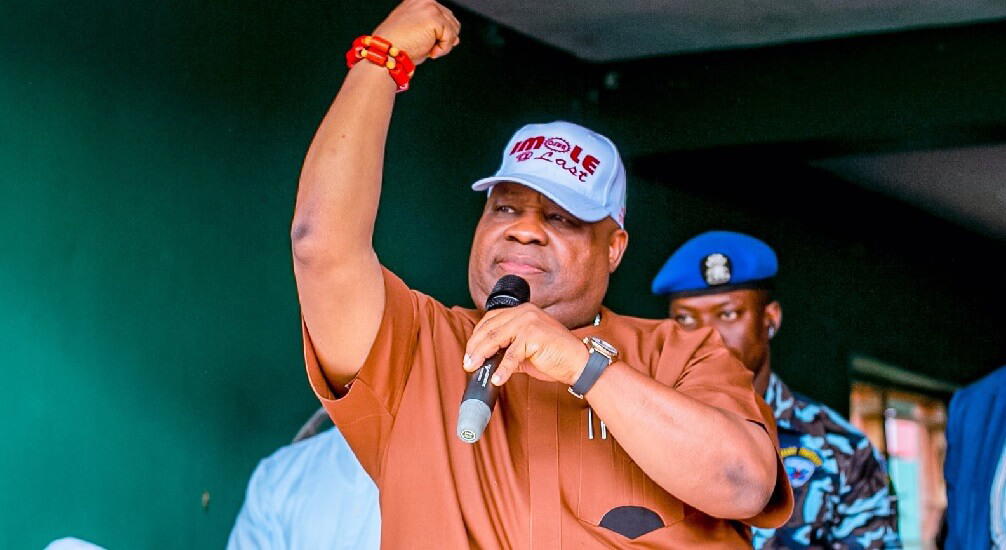
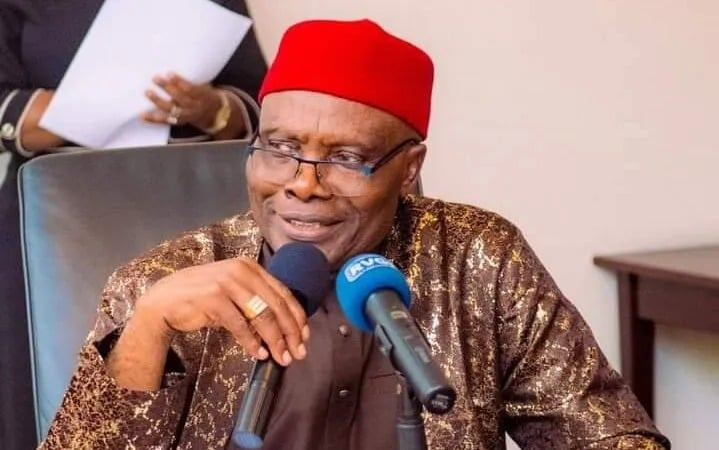
“All politics is local”, Tip O’Neill The dust may have barely settled on the Osun State governorship election of August 15, 2026, but its political debris will travel far beyond Osogbo, the state capital. Although state elections are invariably shaped by local personalities and circumstances, incumbency, political alignments, peculiar grievances and idiosyncrasies, their outcomes can sometimes offer valuable insights into broader national sentiments. The results from Osun therefore contain lessons that the major political parties, particularly the ruling All Progressives Congress, APC, and the main opposition African Democratic Congress, ADC, would be unwise to ignore as Nigeria moves inexorably towards the 2027 general elections. I say this partly from experience. During the 2023 presidential election, I occupied a position from which I could observe at close quarters the relationship between seemingly local political developments and evolving national electoral sentiment. As Senior Special Adviser on Policy and Strategy to the then National Chairman of the ruling party, one of my responsibilities was to study changing public attitudes towards the party, the government and the principal personalities in power, and to offer analysis and recommendations that could help shape political strategy, electoral messaging and persuasive outreach to citizens. Just as it did in 2026, the APC lost in the elections in Osun State in 2022. That experience impressed upon me the importance of not dismissing local political outcomes as isolated occurrences. A governorship election in one state cannot, of course, be mechanically projected onto a presidential contest involving 36 states and the Federal Capital Territory. Local personalities, ethnic and religious considerations, incumbency, party structures and immediate community interests differ considerably from one election to another. Nevertheless, carefully studied local elections can reveal movements beneath the political surface such as declining enthusiasm for a ruling party, growing resentment against established personalities, the resilience or weakness of opposition structures, the effectiveness of political machinery and, above all, the disposition of ordinary voters towards prevailing conditions. Serious political organisations therefore treat such elections as barometers. Complacent ones explain away inconvenient results until they are confronted by a much larger political reality. It is from this perspective that the Osun election deserves attention. The figures themselves are striking. Governor Ademola Adeleke, contesting on the platform of the nationally marginal Accord Party, secured 511,067 votes against 444,815 votes for Bola Oyebamiji of the ruling APC. Najeem Salaam of the ADC came a very distant third with only 17,180 votes. Adeleke won 19 of the 30 local government areas while the APC carried 11. The margin between Accord and the APC was 66,252 votes, while the ADC was effectively reduced to the margins of what was essentially a two-way contest. There is therefore no disguising the magnitude of the ADC’s failure in Osun. A party presenting itself as a fresh phenomenon and one of the principal vehicles through which opposition forces hope to challenge the APC nationally could not make an appreciable impact against the Accord Party, which has nothing approaching the ADC’s current national visibility. That performance should give the party’s leaders in Abuja and throughout the country considerable food for thought and sleepless moments. The ADC has attracted prominent political personalities and has become one of the principal platforms around which former Vice-President Atiku Abubakar and other opposition figures are positioning themselves ahead of 2027. But personalities alone do not constitute a political party, just as declarations of opposition do not amount to an electoral strategy. Photographs of prominent politicians meeting in Abuja, communiqués criticising the government and announcements of defections may generate headlines, but elections are not won in hotel conference rooms or on social media. They are won in states, local governments, wards and polling units. A viable national party aspiring to take power from an entrenched ruling party must possess structures reaching deep into the remotest communities. It needs identifiable leadership, ideological coherence, organisational discipline and a programme that ordinary Nigerians can understand. It requires competent candidates capable of attracting voters beyond elite political circles. Above all, it needs a national narrative sufficiently compelling to persuade Nigerians that it represents not merely another gathering of prominent politicians seeking access to power, but a credible alternative government capable of running Nigeria differently. The ADC cannot therefore afford to dismiss Osun as a local setback or electoral fluke. Seventeen thousand votes in such an intensely c
Don't miss out on breaking stories and in-depth articles.