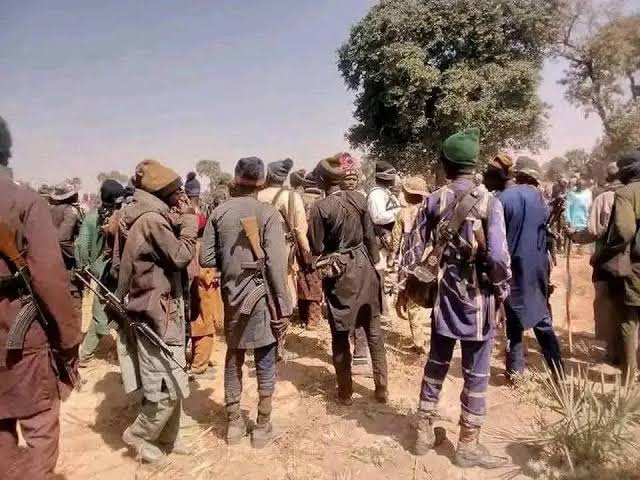
Months after local governments, community leaders and other stakeholders brokered peace agreements with bandit groups in parts of Katsina State, residents said the deals had failed to end killings, abductions, livestock rustling and displacement. The scale of the crisis is reflected in the number of people forced from their homes. Data from the International Organisation for Migration (IOM) showed that more than 138,000 people were displaced by insecurity and natural disasters in Katsina between January 2025 and January 2026. In a bid to end the violence and enable residents to return to their farms, several communities entered into agreements with armed groups. Under the arrangements, the bandits were expected to stop attacks, release kidnapped victims and allow residents to carry out their daily activities. The agreements also allowed the bandits access to communities, including markets and health facilities. The Katsina State Government, however, said the peace initiatives were driven by affected communities and not by the state. Despite the agreements, residents in Bakori, Malumfashi, Dutsinma, Matazu, Musawa, Faskari, Dandume, Kankia and other areas told Daily Trust that bandits continued to operate. In Bakori, where a peace agreement was reached at Kakumi several months ago, residents said there had been little improvement. A former chairman of Bakori Local Government Council and resident of Shuwaki, Aminu Magaji, said about 200 people were in the hands of bandits following repeated abductions. He said hundreds of residents had also been displaced and many had lost their means of livelihood. “Since the peace deal, there has never been a week without an attack by bandits,” Magaji said. Another resident of Guga community, Mahadi Dan Binta Guga, said the peace process was flawed, alleging a lack of commitment and adequate security measures. He called for the deployment of security personnel to affected communities and urged the authorities to dislodge the bandits from their enclaves. In Malumfashi, residents said the agreement had also failed to halt attacks. Naziru Mu’azu, a resident of Gidan Mantau, where dozens of people were killed in a mosque in a previous attack, said residents were still living in fear. “Despite the initial peace deal, the bandits are still attacking our communities. People are still living in fear,” he said. Ibrahim Galadima, a resident of Gidan Mai Jimina in eastern Malumfashi, said the agreement had weakened local vigilantes who previously confronted attackers. He said vigilantes were reluctant to respond to attacks for fear of being accused of violating the agreement. “The peace deal only succeeded in exposing us more. Our vigilantes cannot respond when bandits attack because if they do, they are accused of violating the peace deal,” Galadima said. Two local government chairmen, who spoke on condition of anonymity, said the agreements needed to be regularly reviewed and renewed. They cited Jibia and Batsari as examples where similar arrangements had, at certain periods, brought relief to residents. However, they stressed that dialogue must be backed by stronger security measures. In Dutsinma, prolonged insecurity has forced many residents to flee their communities. Some displaced persons are reportedly living in uncompleted buildings and public places in Baggagadi, Kuki and other towns. The displacement has also cut families off from their farms, livestock and other sources of livelihood. Residents of Matazu and Musawa also reported attacks, abductions and livestock rustling, particularly in rural communities near forest areas. Similar challenges persist in Faskari and Dandume, where insecurity has disrupted farming and livestock production. Kankia has also recorded fresh attacks. Residents said 13 people were killed in Unguwar Guru and Walawa communities in Sukuntuni Ward in attacks allegedly carried out by fighters loyal to a notorious bandit leader identified as Kachalla Maha. Seven people were reportedly killed in Unguwar Guru last weekend before the attackers returned on Monday, August 17, killing more people and extending the assault to Walawa. Several women and girls were also reportedly abducted, while houses and shops were set ablaze. Bakori also recorded fresh violence, with suspected bandits killing three people, including two children and an elderly man, in Gidan Bawa, Kandarawa Ward. About eight people, mostly women, were reportedly abducted, while livestock were rustled. Relative calm in Jibia, Batsari, Safana, Danmusa However, the peace initiatives have yielded some results in parts of the state. Jibia, Batsari, Safana and Danmusa, as well as some parts of Dutsinma, have recorded periods of relative calm, allowing residents to gradually return to farming and other economic activities. The chairman of Jibia LGA, Alhaji Surajo Ado, said the initiative had recorded significant successes despite recent
Don't miss out on breaking stories and in-depth articles.