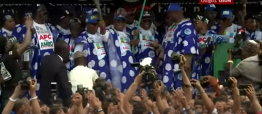
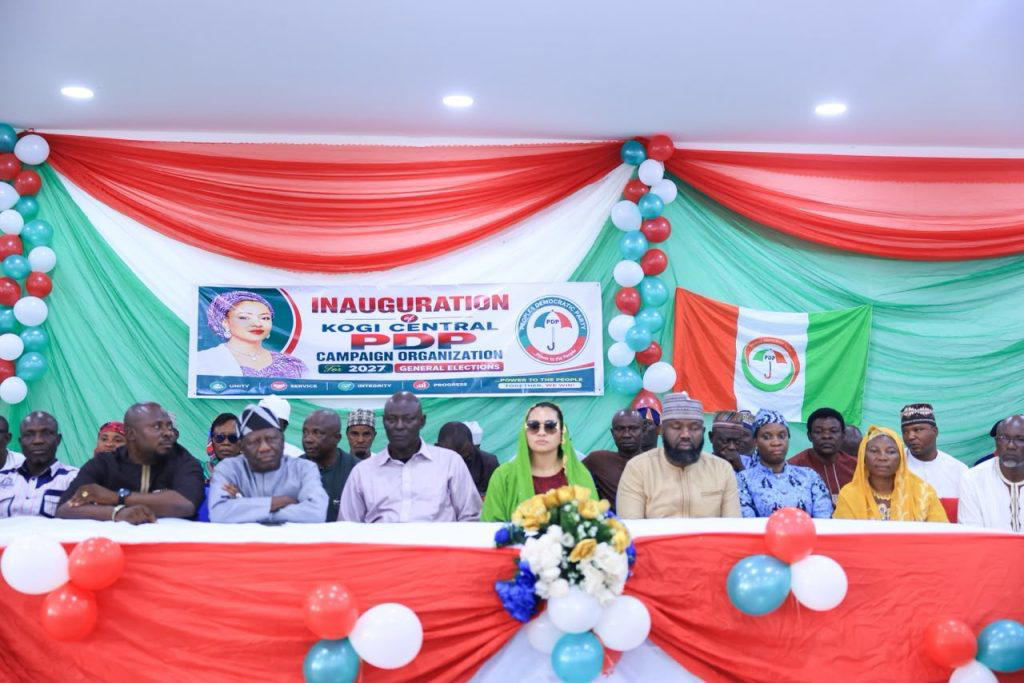
Ahead of the 2027 general election, political campaigns, rallies and grassroots mobilization for votes, support and endorsement begins today for presidential candidates as the Independent National Electoral Commission declares open the electioneering process. Adedayo Akinwale writes. The political fireworks for the 2027 general election officially begins today with a full blast after the Independent National Electoral Commission (INEC) lifts the ban on political campaigns, rallies and grassroots mobilisation. Section 98(1) of the Electoral Act, 2026 stipulates that campaigns in public by every political party shall commence 250 days before the polling day and end 24 hours prior to that day. In line with the revised timetable and schedule of activities, political campaigns for the presidential and National Assembly elections commence today, August 19, 2026 and will close on January 15, 2027. Similarly, political campaigns for the governorship and State Houses of Assembly elections will commence on September 9, 2026 and close on February 5, 2027. Checks revealed that the electoral umpire had fixed January 16, 2027 for Presidential and National Assembly elections, the Governorship and State Houses of Assembly polls would be held on February 6, 2027. The presidential election, has over the years, captivated the hearts of and attracted the interests of many Nigerians because of its suspense, tension, unpredictable outcome and a lot of politicking that comes with it. Expectedly, the 2027 presidential election will be no different. Three leading presidential candidates will again slug it out as they put up every truck in their sleeves to outmaneuver one another in their quest to win the contest . The three leading candidates are: the incumbent and presidential candidate of the All Progressives Congress (APC), Bola Tinubu; former Vice President Atiku Abubakar of the African Democratic Congress (ADC) and Peter Obi of the Nigerian Democratic Congress (NDC). Clearly, the three-horse raise would be a clear replica of what happened during the 2023 presidential poll when Tinubu contested on the platform of APC, Obi on the platform of Labour Party and Atiku contested on the platform of People’s Democratic Party. In spite of the clear discontentment of some Nigerians with the APC government at the centre due to the ongoing economic reforms which has led to high inflation, insecurity and unemployment, among others, the ruling party may win the election at the end of day if the opposition parties fail to present a united front to defeat the APC. Abubakar, a veteran and an old war horse, had ran unsuccessfully for President of Nigeria six times, in 1993, 2007, 2011, 2015, 2019, and 2023. He contested on the platform of Social Democratic Party presidential primaries in 1993, but lost the ticket to Moshood Abiola. He was a presidential candidate of the Action Congress in the 2007 presidential election. He came third to Umaru Yar’Adua of the PDP and Muhammadu Buhari of the ANPP. He also contested the presidential primaries of PDP during the 2011 presidential election losing out to incumbent President Goodluck Jonathan. In 2014, he joined the APC ahead of the 2015 presidential election and contested the presidential primaries. He lost to the late Buhari. In 2017, he returned to the PDP and was the party presidential candidate during the 2019 presidential election, again losing to Buhari. In May 2022, he was chosen as the PDP presidential candidate again, this time for the 2023 general election, he came second to Tinubu. In 2025, Abubakar left the PDP to join the ADC, where he emerged as the 2027 presidential candidate of the party. In the case of Obi, the first time he contested a presidential election was in 2023. His performance in the last presidential election created a huge upset. The Obidient Movement, a support group which was basically led by the youth, took charge of the campaign. It comprised the youth from every part of Nigeria. The way and manner the federal government handled the #EndSARS protest, which led to the death of some youth, swells up the rank of the Obidient group, who were determined to take their pound of flesh through their voter’s card. Prior to the election, they made the best use of social media to galvanise support for Obi. While he came third in the election, his performance wasn’t disappointing. He gave the ruling APC a run for their money, while he also succeeded in depleting the voting base of the PDP in the South East. While Obi has consistently claimed he won the election, he couldn’t prove it in the court of law. Ever since, Obi has become a strong voice in Nigeria politics that cannot be ignored. To some, he is a better choice for the position of the President compared to the candidate of any other party. Ever since, h
Don't miss out on breaking stories and in-depth articles.