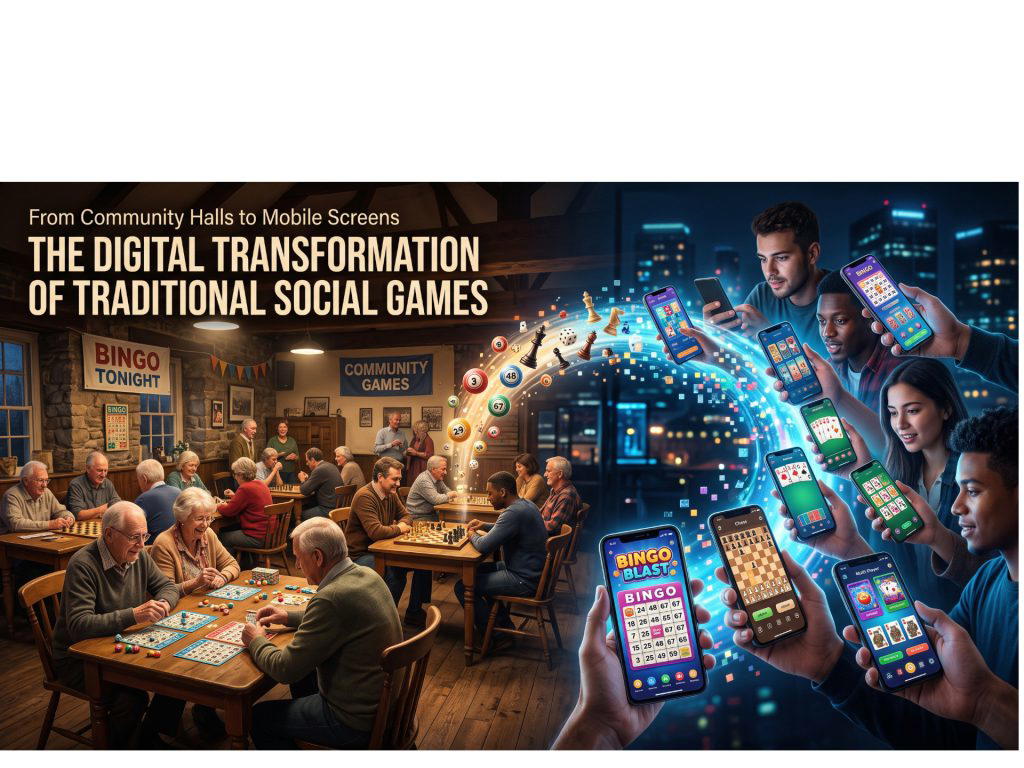
There was a time when a weekend social gathering required quite a bit of coordination. You would agree on a time, trek down to the local community centre, town hall, or bustling neighbourhood plaza, and gather around a physical table. Whether it was a lively game of cards in a British social club or a competitive round of Ayò Olópón under the shade of a veranda in Lagos, these gatherings were the very heartbeat of our social lives. They were where news was shared, friendships were forged, and communities stayed connected. Fast forward to the present day, and the way we connect has changed dramatically. While the desire for human connection remains as strong as ever, our meeting places look entirely different. Physical town halls are increasingly sharing the stage with digital hubs. Across the globe, from the busy streets of Lagos to the towns of the UK, urbanisation and technology are reshaping how we spend our free time. The Changing Face of Nigerian and Global Leisure It is impossible to talk about the shift in modern leisure without looking at the massive wave of urbanisation. As cities grow larger and our daily schedules become tighter, finding the time to travel across town for a casual get-together has become a bit of a challenge. The long commutes and fast pace of city life mean we often have to find smarter, more convenient ways to unwind. At the same time, we have witnessed an incredible rise in smartphone ownership and high-speed internet access. In Nigeria, for example, the transition from desktop computers to mobile screens has happened at a breathtaking pace. A huge portion of the population now accesses the internet solely through their mobile phones. This has completely transformed how people interact. Instead of heading out to a local physical square after a long day, people are logging onto their devices to catch up with friends and play familiar games. This change is not just happening in West Africa; it is a global phenomenon. In the UK, the local community hall has faced similar challenges. With busy work schedules and scattered friendship groups, meeting up in person every week simply isn’t feasible for many of us. Mobile technology has stepped into the gap, offering a virtual space where we can gather without leaving the sofa. It is a shift from physical proximity to digital accessibility, allowing us to keep those vital social connections alive, no matter where we happen to be sitting. Fintech and Mobile Optimization: The Engine Behind the Fun Of course, none of this digital migration would be possible without the incredible tech infrastructure supporting it. A few years ago, playing a game on your phone was often a frustrating experience. You had to deal with slow loading times, constant dropouts, and clunky payment methods. Today, the behind-the-scenes tech is smoother than it has ever been. A major driver of this change, particularly in emerging markets like Nigeria, has been the rapid rise of financial technology, or fintech. The integration of secure, instant payment systems has made micro-entertainment accessible to everyone. Gone are the days of entering complicated bank details every time you want to play. Modern fintech platforms have made payments virtually friction-free; you can securely fund an account or join a quick game with a simple tap on your screen. Alongside these secure payment networks, developers have worked wonders with low-latency infrastructure. This is just a fancy way of saying that games now load instantly and run without any annoying lag. When you’re playing a quick game during a lunch break or whilst waiting for a bus, you want the experience to be seamless. You don’t want to wait five minutes for a screen to load. Mobile optimisation also means that games are designed to consume less data, which is incredibly important in regions where internet costs can add up. By building lightweight platforms that perform brilliantly even on budget smartphones, developers have ensured that no one is left out of the fun. It is this combination of bulletproof security and lightning-fast performance that has allowed mobile social gaming to become such a natural part of our daily routines. The Evolution of Shared Play: Recreating the Neighborhood Warmth One of the biggest worries people had when social games first started moving online was that we would lose the human element. There was a fear that gaming would become a solitary, isolating experience, lacking the laughter, gentle teasing, and shared joy of a real-life gathering. Thankfully, those fears have been put to rest. Modern casual games have done a fantastic job of recreating the warmth and cooperative spirit of traditional neighbourhood meetups. Developers realized early on that people do not just play games for the mechanics; they play them
Don't miss out on breaking stories and in-depth articles.