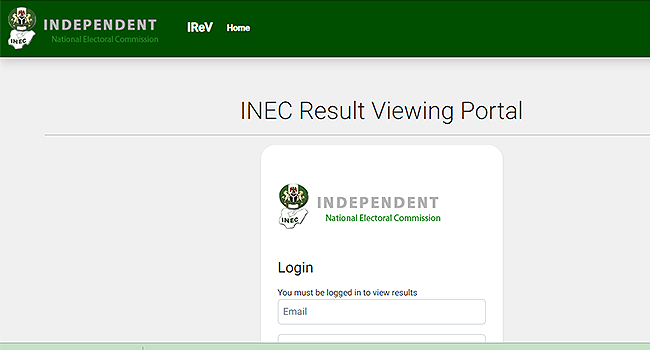
For much of Nigeria’s electoral history, the most dangerous journey in an election has begun after the voter casts the ballot. Ballots may be counted and result sheets signed openly at the polling unit in the presence of voters and party agents, but the physical movement of results through ward, local government and state collation centres has historically created vulnerabilities to alteration, substitution, mutilation and outright fabrication. Judicial records and successive national electoral reform interventions like the Babalakin Commission of Inquiry into the affairs of the Federal Electoral Commission (1986), the Uwais Electoral Reform Committee (2008) and the Nnamani Committee on Constitution and Electoral Reform (2017) converge on a single diagnosis: election results manipulation has been embedded in the pathology of Nigeria’s electoral politics. The enduring challenge, therefore, has been how to protect the integrity of polling-unit results throughout their journey to final declaration. The INEC Result Viewing Portal, IReV, was conceived as solution to the perennial case of election results manipulation. The promise of this innovative technological tool was simple but equally transformative: make the polling-unit result visible to the public to deter manipulation, substitution and manufacture of fake results during collation at the ward, local government and state levels. Under the system, polling officials use the Bimodal Voter Accreditation System (BVAS) to capture images of completed polling-unit result sheets and transmit them to IReV, creating a publicly accessible record against which subsequent collation can be scrutinized. Between 2022 and the 2023 general election, IReV earned its reputation as an electoral game changer. Beyond making polling-unit results publicly accessible, the platform introduced an additional layer of transparency and auditability into the results-management process, thereby constraining opportunities for compromised election officials to alter results during collation. IReV also strengthened INEC’s institutional capacity to resist political pressure aimed at manipulating or suppressing results. The 2023 general election, however, marked a significant rupture in this trajectory. The failure to upload presidential polling-unit results as expected became one of the defining controversies of the election, severely damaging public confidence in a technology that had come to symbolize transparency and integrity in results management. The 2026 Osun governorship election, however, presents a different story. IReV was not without operational shortcomings, and important questions remain regarding the transmission protocols, BVAS operating system, data synchronization, system resilience etc. Nevertheless, the Osun experience reaffirmed the value of electronic transmission and real-time public access to polling-unit results as safeguards against manipulation and as mechanisms for strengthening transparency, auditability and citizen oversight. After the crisis of confidence that followed the 2023 general election, IReV appears to be reclaiming its place as a consequential game changer in Nigeria’s electoral architecture. IReV: From Experiment to Electoral Integrity Infrastructure IReV did not emerge from nowhere. It was INEC’s innovation aimed at leveraging technology to reduce human interference in results management. After the 2011 general election, INEC tried to transmit results by SMS and abandoned the experiment when the number of political parties made it impracticable and the error rate was too high. It tried e-Track, using handheld scanners to convert polling unit results into PDFs and found that many results were never scanned and many scans were illegible. What survived was a narrower, more disciplined idea: transmit state-level presidential results to Abuja through a secure channel ahead of the physical forms so the numbers could be cross-checked in public view. That practice, adopted in 2011, became the Collation Support and Result Verification System (CSRVS), and eventually IReV. The IReV portal was officially deployed during the Nasarawa Central State Constituency by-election on 8 August 2020, alongside the use of Z-Pad tablets. Although the Z-Pad was subsequently discontinued because of technical challenges, the election marked an important turning point: for the first time, citizens could remotely access polling-unit results through a public platform. INEC describes uploaded result sheets as time-stamped and tamper-resistant, creating a digital audit trail accessible to political parties, observers, journalists and citizens. The Nasarawa experiment also underscored the need for a more sophisticated and integrated device capable of supporting both biometric voter accreditation and electronic results management. This evolution eventually produced the Bimodal Voter Accreditation System (BVAS), integrating fingerprint and facial authentication with the ca
Don't miss out on breaking stories and in-depth articles.