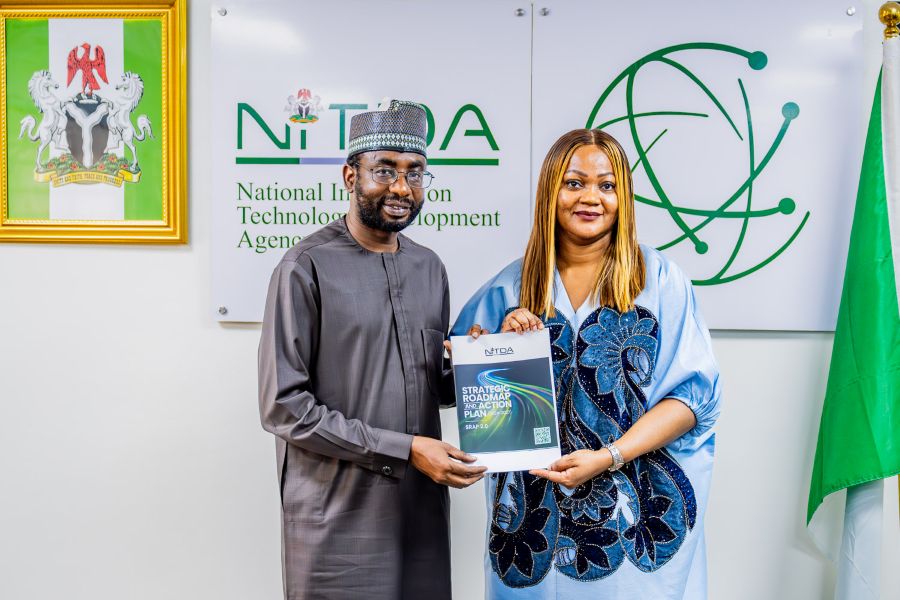
For Director-General, National Information Technology Development Agency (NITDA), Dr. Kashifu Inuwa, the vision behind Nigeria’s newly signed National Sovereign Cloud initiative was designed to strengthen the country’s digital self-determination, localise critical infrastructure and position Nigeria as a digital gateway for West and Central Africa. In this interview, he also addressed the need to build local cloud capacity, reduce capital flight, create jobs and make digital services more affordable for Nigerians, as well as the safeguards being put in place to ensure resilience, cybersecurity and digital trust. Precious Ugwuzor brings excerpts Can you give us a broad overview of the vision that led to the National Sovereign Cloud initiative signed recently? What was the driving condition To keep it simple, the vision is to develop capacity for digital self-determination. This journey started in 2019 when we issued the “Cloud First policy”. At the time, every ministry and MDA was building its own silo data center. The operational cost was huge. So in 2019, we came up with a policy to discourage MDAs from building silo data centers and instead use cloud services. Cloud is cheaper, easier, and you can scale quickly. With on-premise infrastructure, you have to replace everything when it reaches end-of-life. What was the idea? The idea was to let government agencies stop spending money building technology and instead patronise data center providers — both local and international. We also had a local content policy that encouraged government agencies to keep data in-country and grow the local ecosystem. But what happened after the Cloud First policy was that people just moved straight to public cloud. It was easier. The problem is, we need to encourage building the local ecosystem. How should it be looked at? Look at it this way: Africa missed out on the 1st, 2nd, and 3rd industrial revolutions not because we lacked resources or human capital, but because of a lack of institutional and legal frameworks. 1st Industrial Revolution: Africa provided human capital for labor and raw materials, but we didn’t build factories. 2nd Industrial Revolution: Africa was a big market with mineral resources, but we didn’t build industries. 3rd Industrial Revolution: We provided talent and consumed technology. We were always at the receiving end. Now we’re in the 4th Industrial Revolution, which is data-driven. Everything is about data. The next wave of growth is digital transformation. We’ve built the communication infrastructure, but the content and services matter too. How would you describe the metrics? Today, more than 85 per cent of Nigeria’s workload is on public cloud. And more than 85 per cent of internet traffic between Africa and America is for content. Content we create locally travels all the way abroad to be consumed. Imagine localizing that content. The innovation and economic activities we could create. You reviewed it? Yes, we reviewed it. People were going to public cloud and getting waivers. Big tech companies would come, get a 2-year waiver, and that was it. We started asking: Where is your roadmap to localize infrastructure in Nigeria? They’d say: There’s no data center that meets the specification. So I challenged our local data center providers: Why can’t you meet the requirements for hyperscalers to collocate with you? Some hyperscalers already have a “region” or “zone” in Nigeria, but they weren’t actively using it. What was their response? We brought hyperscalers and local providers into a room for a 2-day summit. We asked the hard questions. At the end, it looked like the issue was lack of policy and regulatory clarity. Nobody would give a direct answer. So, your response was? So we set up a “Technical Working Group” with both local providers and hyperscalers. The co-chairs were one local provider and one hyperscaler. The mandate: deliver this for the nation. If we don’t do it, the next generation will ask why we failed. We set up the committee in November 2024 after the summit. We had validation in February 2025. It took over a year. Early this year we had a validation workshop with all stakeholders — regulators, government institutions, etc. After collecting inputs, it took another 5 months to refine. We ended up with 3 documents. What were the documents? Policy Framework Guideline– data classification, policy, etc. Technical Service Provider Guideline – minimum requirements and certifications to provide cloud services. Digital Quality Assurance Guideline – to ensure we meet sovereign requirements. Is the sovereign cloud protectionism-inclined? For us, the sovereign cloud is not about protectionism or shutting out big cloud providers. It’s about asking them to come and build with us in N
Don't miss out on breaking stories and in-depth articles.