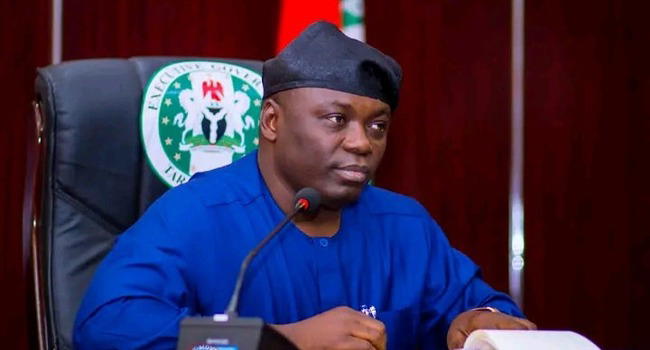
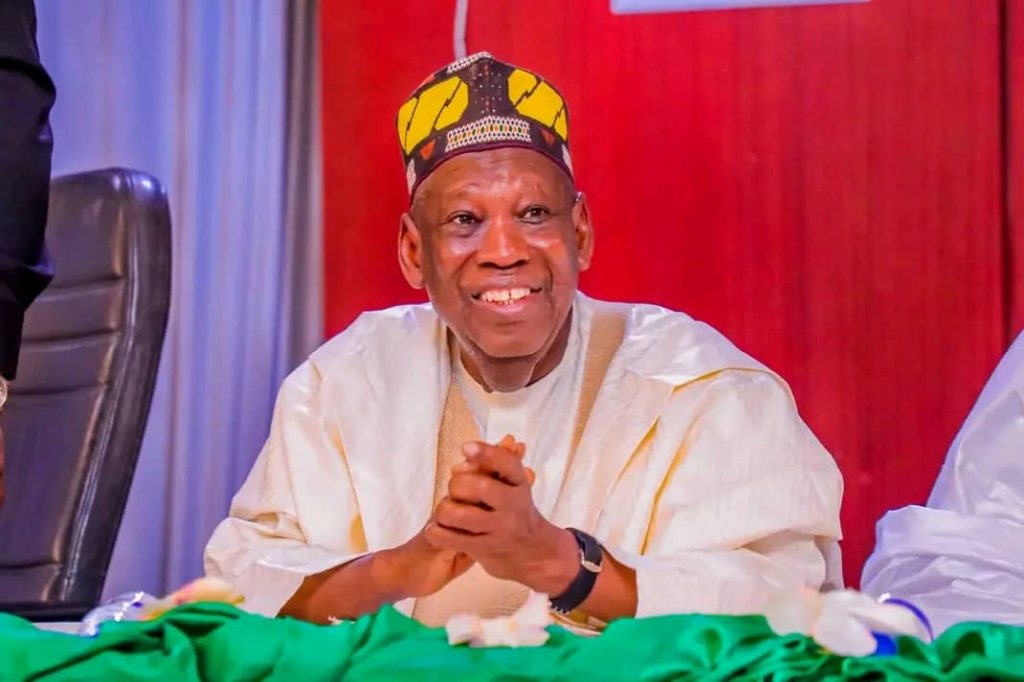
In a democratic culture where political selections are often interpreted through the narrow prisms of electoral arithmetic, zoning arrangements and elite bargaining, the gracious choice of APC’s National Deputy Women Leader, Hajiya Zainab Ibrahim as Taraba’s State Governor’s preference as running mate for 2027 election represents the fusion of executive experience with grassroots credibility, visionary leadership. Jonathan Eze writes. In a political environment often characterised by loud rhetoric, shifting loyalties and intense personal ambitions, a few public figures have built their reputations on consistency rather than controversy. Among this category is Hajiya (Dr.) Zainab Abubakar Ibrahim of Taraba State, whose political journey has increasingly become a reference point in discussions about disciplined party service, women-focused leadership and grassroots mobilisation. Having served for years, and still serving as the Deputy National Women Leader of the All Progressives Congress (APC), Hajiya Ibrahim has quietly but steadily established herself as one of the party’s most dependable female leaders. Beyond the title, however, lies a political career defined by loyalty, humility, humanitarian service and an uncommon willingness to place institutional interests above personal ambition. Loyalty as Political Capital Perhaps the most defining feature of Hajiya Ibrahim’s political life is her unwavering loyalty to both her party and its leadership. In an era when defections and political realignments have become almost routine, she has remained firmly committed to the APC while working across different administrations and party structures. Loyalty, in her case, has never appeared transactional. Rather than using political appointments merely as stepping stones, she has consistently invested her energy in strengthening party structures, mobilising women and expanding grassroots participation. Her emergence as Deputy National Women Leader was itself a recognition of years of organisational work, particularly in women mobilisation and political inclusion. Since assuming office, she has continued to support successive party programmes while maintaining cordial relationships with leaders across different tendencies within the APC. Such consistency explains why many party faithful describe her not merely as a political office holder but as a stabilising force within the women’s wing of the APC. Champion of Women Without Seeking Personal Glory Across Nigeria, conversations about women’s political participation frequently mention the need for leaders who actively create opportunities for others instead of simply occupying positions themselves. Observers argue that Hajiya Ibrahim belongs to this latter category. Throughout her years in state and national politics, she has consistently advocated broader political participation for women, including support for greater representation in legislative and executive offices. Public records also show her support for initiatives aimed at increasing women’s inclusion in governance and decision-making. What distinguishes her advocacy is its collaborative character. She has developed a reputation for supporting female political office holders irrespective of personal relationships or political calculations. Rather than competing with other women leaders, she has often projected unity as a strategic necessity for advancing women’s interests. Those familiar with her political engagements frequently note that she celebrates the success of other women without displaying rivalry or envy, a quality that remains relatively uncommon within highly competitive political environments. Intelligence Without Arrogance Political intelligence is often measured by one’s ability to navigate competing interests without creating unnecessary conflicts. Hajiya Ibrahim has demonstrated this repeatedly. A trained legal professional with years of legislative experience, she combines administrative competence with political tact. Yet one remarkable aspect of her leadership is that intellectual confidence has never translated into elitism. Many accomplished politicians unintentionally create barriers between themselves and ordinary citizens. Hajiya Ibrahim, by contrast, has cultivated the image of an accessible leader whose knowledge serves as a tool for problem-solving rather than self-promotion. Her interactions at political meetings, women mobilisation programmes and community engagements often reflect a listening style of leadership. She appears more interested in understanding local realities than dominating conversations. This combination of competence and humility has significantly strengthened her credibility across different political and social constituencies. Humanitarian Service Beyond
Don't miss out on breaking stories and in-depth articles.