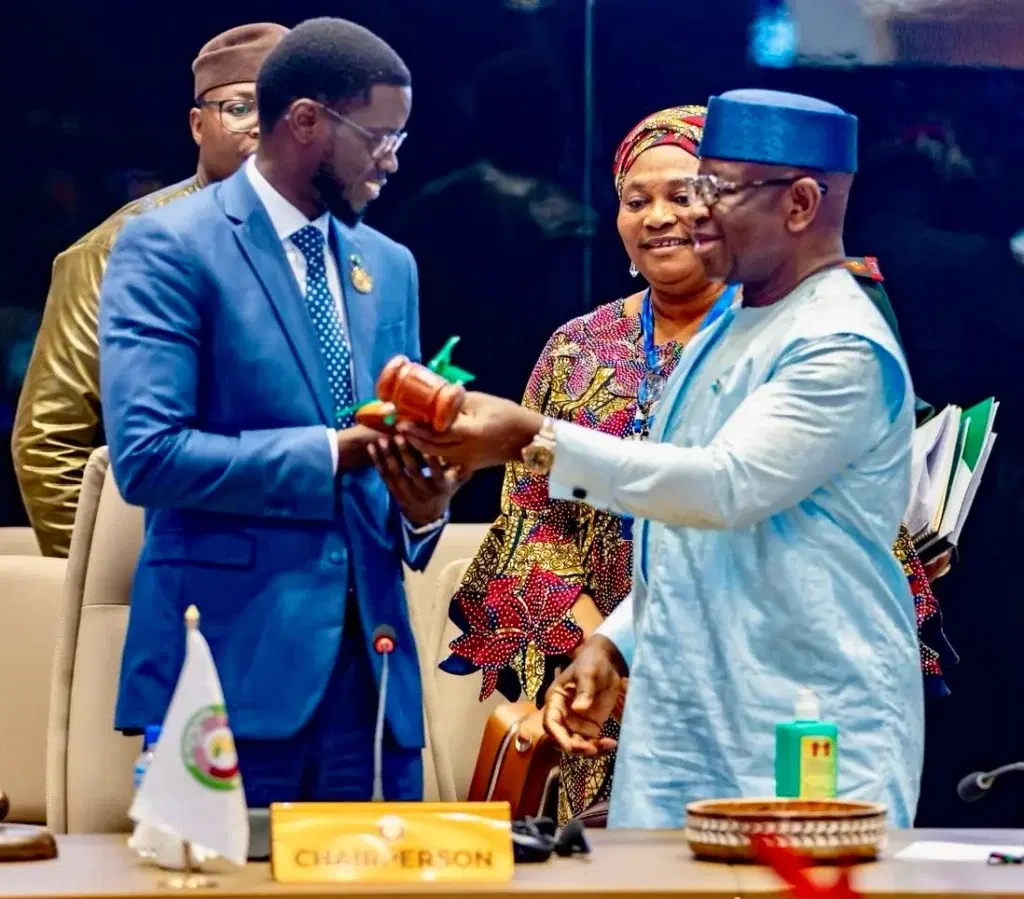
Michael Olugbode in Abuja More than two decades after the guns fell silent in Liberia and Sierra Leone, the ghosts of West Africa’s bloody wars returned to Abuja on Thursday—not through another battlefield, but through a fierce contest over who should be credited with restoring peace to the region. At the centre of the debate was Nigeria’s Defence Minister Christopher Musa, who challenged narratives that foreign powers liberated Liberia and Sierra Leone, insisting that the decisive sacrifices were made by African troops under the banner of ECOMOG. His intervention came as ECOWAS honoured former ECOMOG commanders and journalists who covered the conflicts, including Nigerian reporters who lost their lives in Liberia. The ceremony provided a rare opportunity to revisit one of the most consequential chapters in Nigeria’s military and diplomatic history: the decision by West African states, led substantially by Nigeria, to deploy troops into neighbouring countries engulfed by brutal civil wars when the region’s own security was at stake. ECOWAS was created in 1975 primarily as an economic integration organisation. But the devastation caused by the Liberian civil war forced the organisation into an unprecedented security role. In 1990, ECOMOG was deployed to Liberia, marking one of Africa’s most significant attempts at regional collective security. Nigeria became the backbone of the intervention, providing troops, logistics and political leadership. Musa’s disclosure that he lost 10 coursemates from the Nigerian Defence Academy gives the story a powerful human dimension. It demonstrates that the intervention was not an abstract diplomatic exercise but one in which Nigerian soldiers paid with their lives. The Liberian conflict had regional consequences, while Sierra Leone descended into its own devastating civil war. ECOMOG again became a central component of the military effort to restore constitutional government and combat rebel forces. The recognition of Krees Imodibie of Vanguard and Tayo Awotusin of Champion provided another important dimension. They represent journalists who entered conflict zones to document events and never returned. Their posthumous recognition means the story is also about the price paid by the media in documenting Africa’s wars. Musa, challenged narratives crediting foreign powers with ending the civil wars in Liberia and Sierra Leone, insisting that the Economic Community of West African States Monitoring Group (ECOMOG) played the decisive role in restoring peace in the two countries. Musa while speaking in Abuja at the unveiling of Fighting Bushfires: ECOWAS and Peacemaking in West Africa – The Experience and Learning Curves, a book documenting the regional bloc’s interventions in the conflicts in Liberia, Sierra Leone and Guinea-Bissau, said the publication was important because Africans must document their own history or risk having it rewritten by others. He particularly took issue with accounts circulating online that portray foreign intervention as the force that liberated Liberia and Sierra Leone. “If you go to the internet, you see their story that they were the ones that liberated Sierra Leone and Liberia,” Musa said, drawing laughter from the audience. He said the historical record must be corrected, stressing that ECOMOG troops made enormous sacrifices in restoring peace to the war-torn countries. “We must write the story of our region, otherwise others will write it,” he said. Musa recalled how one of the young officers, despite being advised to remain in Nigeria because he was considered too junior, insisted on joining his colleagues in Liberia and was killed about a year later. “Those are the sacrifices that have been made and that will continue to be made,” Musa said, urging West Africans to ensure that the lives lost in the conflicts were not sacrificed in vain. “What we owe them is to make sure that we unite, and not allow Africa to fall. Other than that, they will not achieve what they died for,” he added. The minister said Nigeria’s commitment to regional security was driven by the recognition that instability in neighbouring countries inevitably affects the country through refugee flows, disrupted trade, organised crime and other forms of insecurity. He warned that the security challenges confronting the Sahel today demonstrate the danger of allowing instability to spread across borders. Musa also stressed that military force alone could not permanently resolve conflicts, arguing that kinetic and non-kinetic approaches must operate together. According to him, military action constitutes only about 30 per cent of the solution to insecurity, while the remaining 70 per cent requires non-kinetic measures. He urged ECOWAS
Don't miss out on breaking stories and in-depth articles.