
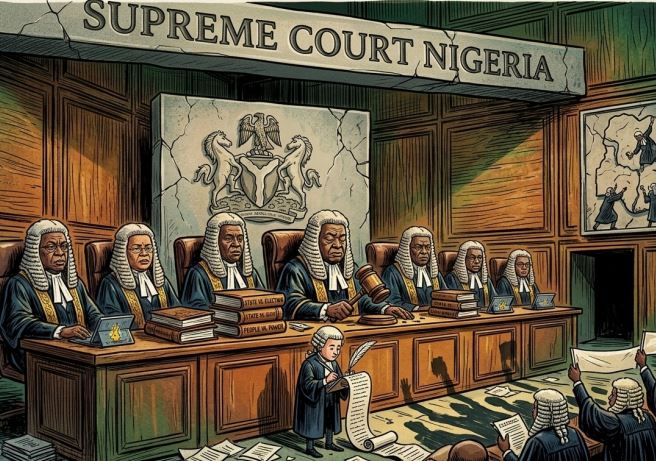
The article discusses the role of Nigeria's judiciary in elections, questioning whether it is still a reliable hope for ordinary citizens. It highlights concerns over the judiciary's handling of election disputes, with many people feeling that recent court decisions have been inconsistent and undermined trust in the electoral process. As Nigeria marks 66 years of independence, critics argue that the courts have become a battleground for political manipulation, where politicians often challenge election results and tell opponents to "go to court," believing the system is skewed in their favor. This has led to a significant increase in election petitions over the years, rising from just two in 1999 to nearly 2,000 in 2023. Some prominent figures, including former President Olusegun Obasanjo and Cardinal John Onaiyekan, have expressed concerns that the judiciary should not decide elections but rather resolve disputes. They believe the current situation, where court rulings often dictate election outcomes, damages democracy and public trust. Organizations like ActionAid have pointed out specific cases where contradictory judgments have confused citizens and raised doubts about the fairness of the judicial process. They argue that the focus on legal technicalities rather than the substance of cases has led to unjust outcomes. Overall, the article emphasizes the need for reforms to strengthen Nigeria's electoral system and restore confidence in the judiciary, ensuring that elections reflect the will of the voters rather than being decided in courtrooms.
Related Articles



Don't miss out on breaking stories and in-depth articles.