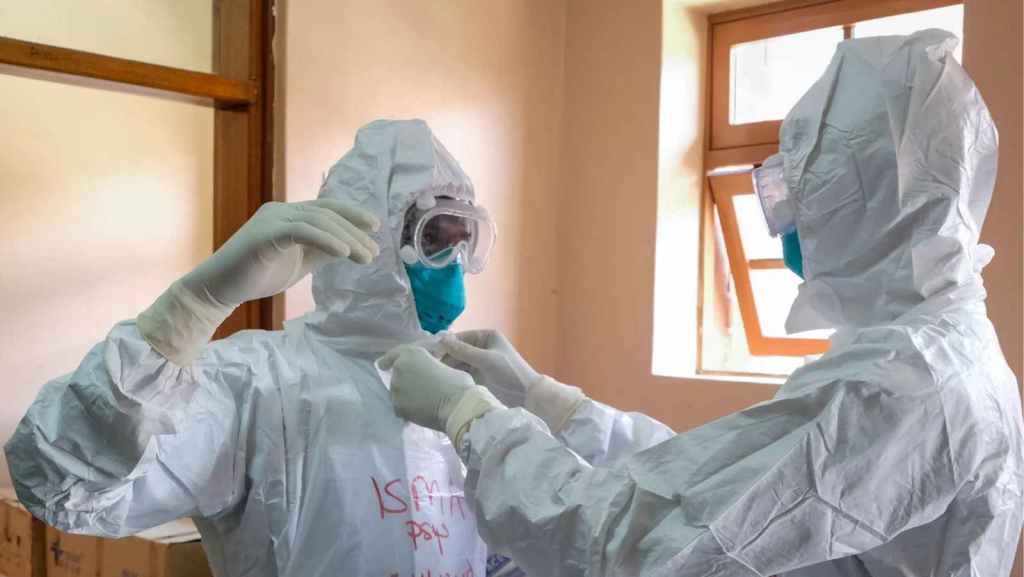
The Democratic Republic of the Congo (DRC) is currently experiencing its worst Ebola outbreak ever, with over 8,000 cases and nearly 3,900 deaths. This situation is complicated by ongoing issues like conflict, violence, and food shortages, making it harder to control the disease. To stop the spread of Ebola, several coordinated actions are needed at the same time. These include: Finding and isolating sick people: Quickly identifying those who might have Ebola and keeping them away from others for treatment. Tracing contacts: Following up with people who may have been in contact with infected individuals. Preventing infections: Ensuring that hospitals and communities have measures in place to stop the disease from spreading. Building trust in communities: Working closely with local leaders to share accurate information about Ebola and encourage people to seek medical help early. Key strategies in the response include: Surveillance: Collecting data to track how the disease is spreading, which helps health teams respond quickly. Infection prevention and control: Using strict protocols in healthcare settings to protect patients and staff from infection. Water, sanitation, and hygiene (WASH): Keeping treatment centers clean and ensuring safe practices to prevent the virus from spreading. Community engagement: Involving local communities to share information and encourage safe behaviors. Patient care: Providing respectful and effective treatment to those infected, which can help save lives and build trust in the healthcare system. Overall, a comprehensive approach that combines these efforts is essential to effectively combat the Ebola outbreak in the DRC.
Don't miss out on breaking stories and in-depth articles.