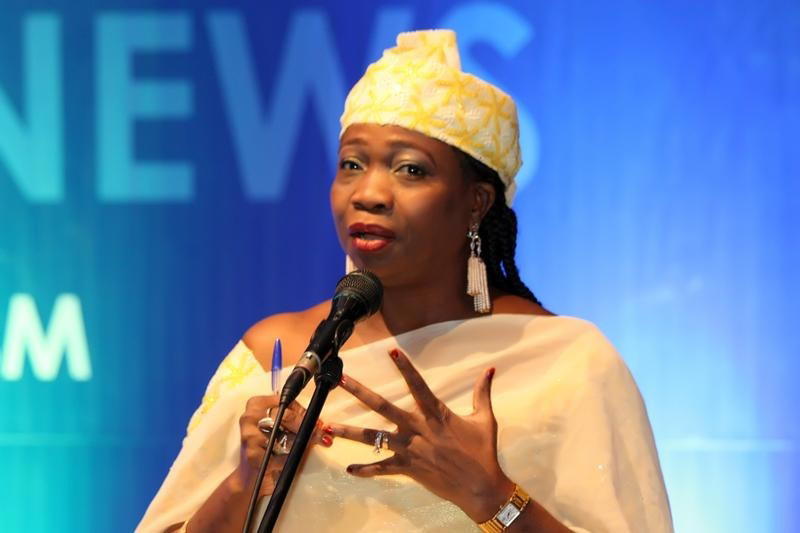
Michael Olugbode in Abuja Delta State Deputy Governor, Sir Monday Onyeme, has clashed with Nigerian community leaders in Atlanta, United States, over President Bola Tinubu’s performance, with the deputy governor defending the administration’s economic reforms and infrastructure projects while his audience challenged their impact on ordinary Nigerians. The disagreement, which occurred during Onyeme’s recent working visit to Georgia, exposed a sharp divide over whether the federal government’s policies are delivering the promised transformation or worsening the economic hardship confronting millions of citizens. While Onyeme described Tinubu as a once-in-a-generation leader whose decisions were repositioning Nigeria for sustainable growth, some members of the audience cited the high cost of living, persistent insecurity, deteriorating highways and alleged irregularities in public procurement as evidence that the administration had fallen short of expectations. The exchanges became particularly pointed when community leaders Raymond Ekuerhare and Chief Emeka Chimekwene rejected the deputy governor’s glowing assessment, insisting that Nigerians abroad were not relying on social media alone to evaluate developments at home.Onyeme had accused Nigerians of using social media to spread misinformation, disinformation and half-truths about the achievements of Tinubu’s administration and the government of Delta State Governor, Sheriff Oborevwori. He argued that such narratives were damaging Nigeria’s international image and preventing citizens abroad from appreciating what he described as the transformative impact of the President’s eight-point Renewed Hope Agenda. “I have been around for a while, both as a private citizen and now in government. There is no Nigerian leader that even comes close to President Tinubu in terms of achievement, in making tough choices that will set the country apart, now and in the near future,” he said.The deputy governor, who identified himself as a professional accountant, maintained that the administration’s policies were laying the foundation for long-term economic stability, improved governance and accelerated development. But Ekuerhare, a business and community leader, who said he travelled to Nigeria almost every other month, disputed that assessment, pointing to the gap between government claims and the realities confronting citizens. He specifically cited the condition of the Benin-Asaba, Ore-Benin, Benin-Warri and Warri-Ughelli-Bomadi roads, arguing that the state of the highways undermined claims of impressive infrastructure development. “The eight-point Renewed Hope Agenda is only good on paper but not affecting people’s lives for good,” he said.Ekuerhare also questioned the administration’s record on security, arguing that insecurity and kidnappings continued to undermine the freedom of movement and economic activities of Nigerians. Chimekwene, another Delta State community leader in Atlanta, raised concerns over public procurement, particularly contracts he alleged had been awarded without competitive bidding to the Chagoury Group. He argued that allegations of non-competitive contract awards raised questions about transparency and accountability, insisting that a government seeking to transform the country must demonstrate that public resources are being managed responsibly. “We don’t depend on social media for serious matters of the state. We have family members at home; their lives and living conditions have not improved under President Tinubu,” he said. Chimekwene also challenged Onyeme’s economic assessment, arguing that the hardship experienced by households made it difficult to describe the administration’s record as transformational. He, however, expressed greater confidence in Onyeme’s account of the impact of Governor Oborevwori’s MORE Agenda in Delta State, saying members of the Diaspora could more readily verify some of the state government’s projects during visits home. Responding to the criticisms, Onyeme insisted that the federal government’s policies had created the conditions enabling state and local governments to pursue development programmes more effectively. He placed particular emphasis on local government autonomy, describing the Supreme Court’s July 2024 judgment on the financial independence of local councils as a landmark step towards strengthening grassroots governance and advancing true federalism.The judgment followed the Federal Government’s legal action seeking to protect local governments’ constitutional rights, including their access to funds without unlawful interference by state governments. Onyeme said successive administrations had failed to fully realise local government autonomy despite reforms introduced in 1976 under the military administration of General Murtala Muhammed and continued under General Olusegun Obasanjo.
Don't miss out on breaking stories and in-depth articles.