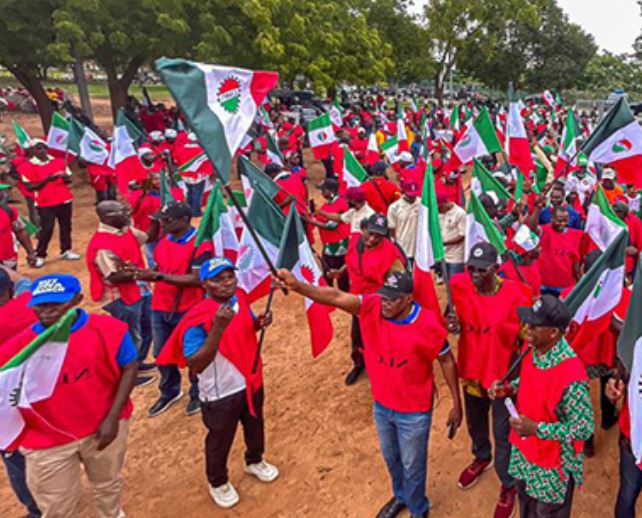
By Moshood Oshunfurewa This symptom has fully emerged. Nigeria’s indigenous industrialisation policy has failed. This failure is not the product of any single policy misstep but the systematic collapse of a six-decade-old structural architecture. This is a consequence of energy costs that devour manufacturing margins, foreign exchange controls that choke off access to production inputs, corruption that converts industrial support funds into private estates, and infrastructure decay that makes any locally produced good structurally uncompetitive against imports. When Chinese traders move from wholesale into retail and directly capture the customer networks of Nigerian local merchants, this is not an isolated market event. It is the inevitable outcome of a domestic industrial capacity so thoroughly dismantled that foreign capital, cheaper, faster, better capitalized, simply fills the vacuum. What is more dangerous is that this crisis is being distorted by ethnicised narratives. The protesters at the Lagos International Trade Fair were largely Igbo traders, and some political actors are happy to redirect the confrontation into an “Igbo versus Chinese” story, burying the real structural culprits, a political economy that makes it impossible for local producers to survive while imported goods flow in unimpeded. When Chinese manufacturers can mass-produce at a fraction of Nigerian costs and sell directly to Nigerian consumers, Nigerian artisans and SME owners are not facing a competitor. They are facing an entire industrial ecosystem they were never permitted to build. The crisis of Nigerian manufacturing begins as an energy crisis. The Association of Power Generation Companies reports installed capacity above 15,500 megawatts, but the grid transmits only about 4,500 megawatts. Between 2,500 and 4,000 megawatts of generated power are wasted daily. Eighty-five million Nigerians live without electricity. A tailor earning N4,000 a day spends N3,000 of it on generator fuel. Nigerian businesses and households spend roughly $23 billion annually on diesel and petrol for self-generation, and the World Bank estimates the economic cost of unreliable electricity at $26–29 billion. This energy cost structure means that any locally manufactured good carries a “power tax” from the moment it is conceived—a tax Chinese manufacturers never pay. Chinese factories enjoy stable grid electricity; Nigerian factories must build their own power plants. When Chinese goods enter the market at scale-driven low costs, Nigerian producers are not in a fair fight. They are in a war whose outcome was fixed before the first shot. Foreign exchange controls are the second strangulation. Between 2015 and 2023, the Central Bank of Nigeria imposed eight years of FX controls and 43 import bans in an attempt to force local production. The result was catastrophic: firms could not obtain the foreign exchange needed to import raw materials and machinery, and productive capacity fell rather than rose. Between 2023 and 2024, over 85 percent of Nigeria’s manufactured goods trade was imported; by the first half of 2025, that figure reached 93.3 percent. Protectionism did not midwife indigenous industry. It accelerated deindustrialisation—because Nigeria had never built the productive capacity that could substitute for imports in the first place. The third strangulation is institutional corruption. Successive industrial support schemes, from the Anchor Borrowers’ Programme to various manufacturing intervention funds, have fallen into the same trap: funds intercepted at disbursement, subsidies routed to politically connected firms rather than genuinely productive SMEs, and the ordinary artisan and micro-entrepreneur never once appearing on the policy radar. The nation’s fundamental problem is not a lack of vision but “a deficit of institutional capacity and execution discipline” to convert vision into results. Stolen wealth is displayed in the offshore properties of Nigerian public officials, while the resources that should have flowed into industrialisation never reach production. The Lagos trade fair protests exposed a deeper economic logic. Chinese traders initially entered the Nigerian market as wholesalers, using China’s scale advantages to supply Nigerian retailers. But as local retail capacity shrank and local merchants lost the ability to accumulate capital, Chinese traders moved directly into retail—renting shops, building warehouses, copying customer phone numbers from waybills, and undercutting local merchants by selling straight to final consumers. This is not simple “unfair competition.” Chinese retailers possess advantages Nigerian merchants simply cannot match: direct factory sourcing that bypasses every intermediary; trade finance from Chinese banks; and a renminbi-naira currency swap (however underutilised at under 10 percent) that lets them sidestep dollar shortages. The Nigerian merchant, by c
Don't miss out on breaking stories and in-depth articles.