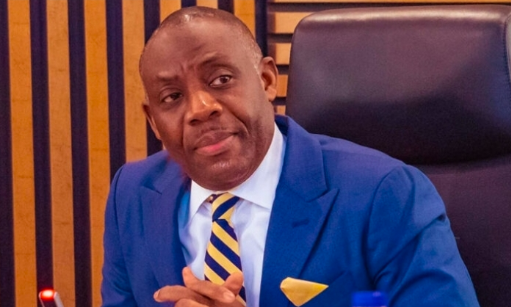
By Joseph Erunke, Abuja The federal government has pledged to honour its agreements with tertiary institution workers, declaring that Nigerian students must no longer lose precious academic years to strikes triggered by unfulfilled government commitments. Minister of Education, Dr Tunji Alausa, gave the assurance on Tuesday in Abuja while unveiling the 2026 agreements between the Federal Government and staff unions in universities, polytechnics and colleges of education. Alausa, who described the agreements as a major step towards restoring confidence in government-union relations, said the administration of President Bola Tinubu was determined to end the cycle of broken promises, industrial disputes and disruptions to academic calendars that had plagued the country’s tertiary education system for decades. He declared that a four-year degree programme must be completed in four years, insisting that the Federal Government would fulfil its obligations under the newly unveiled agreements. “During his campaign, President Bola Ahmed Tinubu promised that a four-year course would be completed in four years. Today, through his leadership, these agreements give practical expression to that pledge: A promise made, a promise kept, and trust restored,” the minister said. The agreements cover the Consolidated Academic Tools Allowance, CATA, for the Academic Staff Union of Polytechnics, ASUP, and the Colleges of Education Academic Staff Union, COEASU, as well as the Consolidated Non-Teaching Tools Allowance, CONTTA, for non-teaching staff unions across universities, polytechnics and colleges of education. The allowances are to take effect from January 1, 2026, in line with the agreements and applicable implementation guidelines. Alausa, however, acknowledged that the unveiling of the agreements was only the beginning, stressing that their credibility would ultimately depend on the government’s ability to implement the provisions faithfully. “Let me state clearly, on behalf of the Federal Government: We will fulfil our own part of these historic agreements. We recognise that public confidence will depend on the obligations we honour after this ceremony,” he said. In a move aimed at preventing future disputes over the implementation of agreements, the minister announced the expansion of the existing Implementation and Monitoring Committee, IMC, established for the agreement with the Academic Staff Union of Universities, ASUU. Under the new arrangement, the committee will become a single monitoring platform for agreements with academic and non-academic staff unions across tertiary institutions. Its membership will be broadened to accommodate the relevant unions and stakeholders, with responsibility for tracking agreed milestones, assessing progress, resolving implementation challenges and ensuring accountability through periodic reports. According to Alausa, the committee will monitor both achievements and outstanding obligations to ensure that commitments are implemented within agreed timelines. He said the government intended to identify implementation difficulties early and resolve them before they degenerated into disputes capable of disrupting academic activities. The minister urged government agencies to discharge their responsibilities diligently, while governing councils and institutional managements were directed to maintain accurate records, comply with implementation guidelines and cooperate fully with the committee. He also urged union leaders to keep their members informed and channel emerging concerns through established mechanisms. Alausa recalled that agreements between successive governments and staff unions had, for decades, been undermined by delayed, incomplete or unfulfilled commitments, leading to recurring industrial disputes. The consequences, he said, extended beyond the negotiating parties, with students losing valuable learning time, families bearing additional financial burdens and teaching and research suffering repeated setbacks. He noted that prolonged strikes had created uncertainty around academic calendars, making it difficult for students to complete their programmes within the prescribed periods. The minister said the Tinubu administration was determined to reverse the trend by building a system in which agreements were respected and academic activities proceeded without unnecessary interruptions. He maintained that industrial harmony was indispensable to educational excellence, adding that stable academic calendars would enable institutions to plan effectively, sustain research and allow students to concentrate on their studies. “We must strengthen early consultation and resolve differences through constructive dialogue, mutual respect and good-faith engagement. Our students and their families must remain at the centre of these efforts,
Don't miss out on breaking stories and in-depth articles.