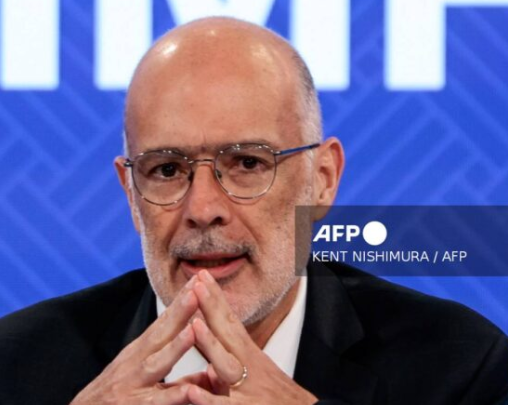
The International Monetary Fund (IMF) has advised the Federal Government against restoring broad petrol subsidies, recommending targeted financial assistance and social protection programmes to cushion the impact of rising fuel prices on vulnerable Nigerians. The Fund said blanket fuel subsidies were costly, often disproportionately benefited higher-income earners and could worsen the country’s fiscal challenges amid rising borrowing costs. Rodrigo Valdés, director of the IMF’s Fiscal Affairs Department, stated this on Wednesday during a press briefing on the fund’s Fiscal Monitor at the 2026 annual meetings of the IMF and World Bank in Bangkok, Thailand. Valdés was responding to concerns about the fund’s recommendation that energy prices should reflect market realities, despite the potential impact of higher petrol prices on transportation costs, inflation and poverty in Nigeria. The question also came amid calls for the government to restore petrol subsidies ahead of an election year. “Protecting people is not the same as protecting the price of fuels,” Valdés said. He explained that fuel subsidies and other measures that prevent energy prices from fully adjusting to supply shocks had cost countries between one and 1.5 per cent of gross domestic product (GDP) in 2026. “It’s first fiscally very costly, and second, if you look at the pattern of consumption, it’s easy to see that that subsidy is readily regressive in many places,” he said. The IMF official urged governments to prioritise social safety nets and use household data to identify people who need assistance rather than subsidising fuel prices for everyone. “There are better tools to deal with this,” he said. The Federal Government recently announced a 30-day petrol discount at Nigerian National Petroleum Company (NNPC) Limited retail outlets, with public transport operators prioritised under the initiative. Minister of Finance, Taiwo Oyedele, said NNPC retail stations would sell petrol at cost by foregoing their retail profit margins, describing the intervention as temporary relief rather than a return to petrol subsidy. The government also proposed negotiating a ceiling of N1,350 per litre on petrol’s ex-gantry or landing cost, subject to monthly reviews. The IMF also called for targeted interventions to mitigate the impact of rising fuel prices on transportation and other essential household expenses. Davide Furceri, Division Chief at the IMF Fiscal Affairs Department, answers a question at a Fiscal Monitor press briefing during the 2026 IMF-World Bank Group Annual Meetings at the Queen Sirikit National Convention Center (QSNCC) in Bangkok on October 14, 2026. (Photo by ANTHONY WALLACE / AFP) Davide Furceri, a division chief in the fund’s Fiscal Affairs Department, said governments could redirect some of the resources spent on blanket fuel subsidies towards vulnerable households. “For example, you mentioned transportation costs. Yeah, gasoline could go up, and perhaps bus fees may be subsidised in a way that is a much better policy at the end of the day than just a blanket subsidy for everybody,” Furceri said. He identified school feeding programmes, geographically targeted assistance and support for vulnerable farmers as alternative measures governments could adopt to protect people affected by rising energy costs. Furceri acknowledged that some countries lacked comprehensive household registries and digital payment systems needed to identify eligible beneficiaries and deliver assistance effectively. However, he said governments could adopt alternative approaches in the short term while developing stronger systems to improve the delivery of social support. He stressed that interventions should be limited, targeted and temporary to ensure that assistance reached those who needed it most without creating additional pressure on public finances. Valdés also warned that keeping fuel prices artificially low could worsen pressure on global energy supplies by preventing consumers from adjusting their demand when supplies were constrained. “When you subsidise, you don’t allow, at the end of the day, demand to adjust,” he said. He explained that when less fuel was available in the global economy, demand needed to adjust to reflect the supply constraints. “And reality is that we have less fuels in the world economy. That means that someone else has to adjust more, and the market produces a higher price for that.” The IMF official maintained that broad fuel subsidies were not only expensive and regressive but could also produce spillover effects across the global economy. The fund’s position reinforces its call for governments to protect vulnerable households through targeted and temporary assistance rather than broad price interventions that could strain public finances and distort energy consumption.
Don't miss out on breaking stories and in-depth articles.