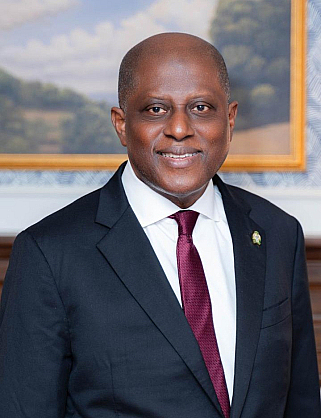
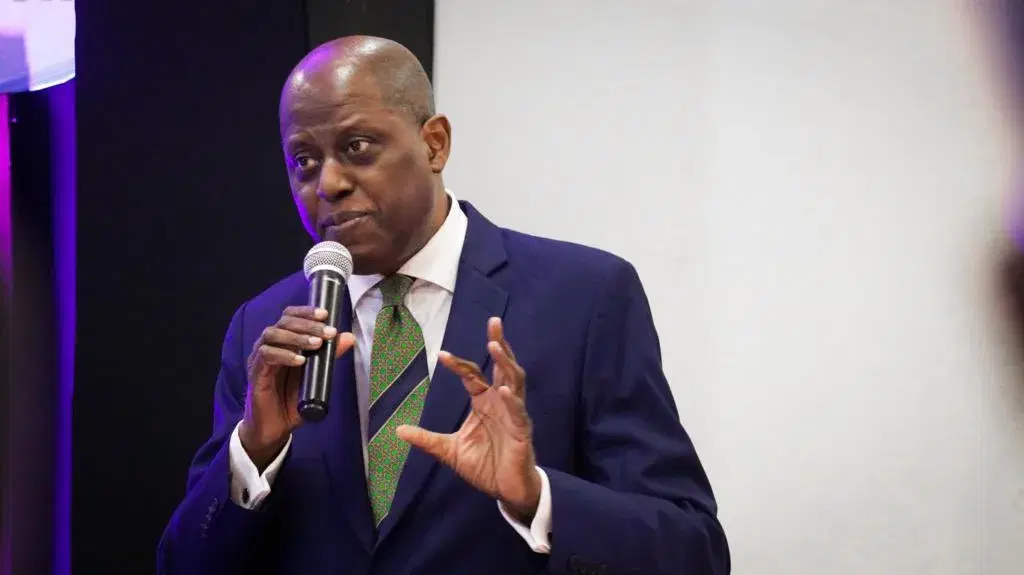
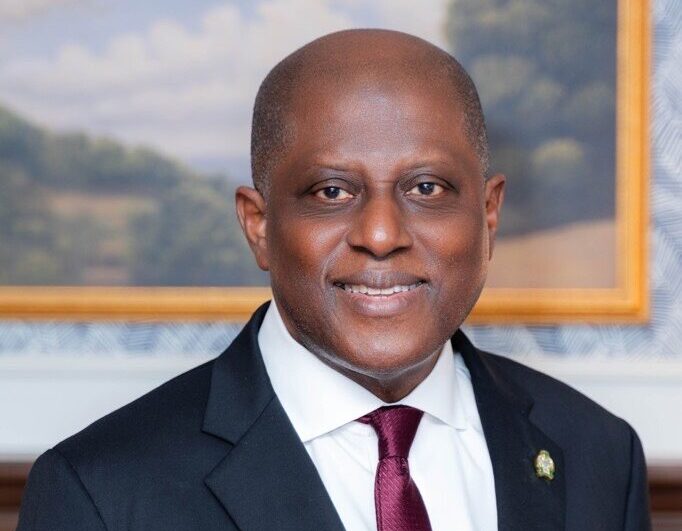
Nume Ekeghe in Bangkok, Thailand The Africa Finance Corporation (AFC), the continent’s leading infrastructure solutions provider, yesterday announced the appointment of the Governor of the Central Bank of Nigeria (CBN), Mr. Olayemi Cardoso as Chairman of its Board of Directors. He succeeds the immediate-past Chair, Ireti Samuel-Ogbu, who served the Corporation meritoriously during her tenure and continues to serve as a board member. The Minister of Finance and Coordinating Minister of the Economy, Taiwo Oyedele and Cardoso, yesterday wooed investors with commitments to sustain economic reforms, improve the investment climate and attract long-term capital as the federal government seeks to mobilise $78.5 billion for 65 projects across key sectors of the economy. Also yesterday, the Dangote Group endorsed the federal government’s reforms, with its Group Chief Economist, Hassan Mammud, saying fiscal and monetary policy changes had helped stabilise investments in the Dangote Refinery and other subsidiaries. He urged international investors to invest in Nigeria, describing the country as an emerging model for other African economies. At an investors’ forum in Bangkok, Thailand, held on the sidelines of the ongoing International Monetary Fund and World Bank Group Annual Meetings, the federal government’s officials outlined the government’s priorities, including reducing inflation to single digits, addressing power sector constraints, improving regulatory efficiency and providing clearer fiscal data to support investment decisions. A new feature introduced this year was a deal room that designed to connect investors with key policymakers, guide them through available investment opportunities and answer questions about investing in Nigeria. The initiative is intended to give investors direct access to relevant government officials and help convert interest in the country’s investment pipeline into actual commitments. The pipeline comprises 65 projects requiring a total of $78.5 billion, with energy and transport accounting for almost four-fifths of the funding requirement. According to the project breakdown presented at the forum, oil, gas and power account for 25 projects requiring $36.4 billion, while transport and maritime account for eight projects valued at $25 billion. Agriculture and agro-processing account for six projects requiring $9.8 billion, while industry, manufacturing and mining comprise 17 projects requiring $6.6 billion. Technology, health and urban services account for the remaining nine projects, with a combined capital requirement of $700 million. The government presented investment opportunities across different funding categories, from projects requiring less than $100 million to those needing $1 billion or more. The pipeline ranges from $1 million to $15 billion per project, with a median capital requirement of $153 million. Of the 65 projects, 48 require less than $500 million, while 17, valued at a combined $72.3 billion, require at least $1 billion each. The government is also seeking to strengthen investor participation by highlighting the protections available to foreign investors. These include permission for 100 per cent foreign ownership in most sectors, full repatriation of capital and profits with a Certificate of Capital Importation, double taxation and bilateral investment treaties, and Nigeria’s membership of the International Centre for Settlement of Investment Disputes (ICSID). The investment framework also includes a five per cent annual tax credit on qualifying capital expenditure for five years under the Economic Development Tax Incentive. Oyedele called on investors to consider longer-term commitments, particularly as interest rates begin to decline and the relative attractiveness of fixed-income investments changes. He asked investors what the government needed to do to encourage them to commit capital for longer periods and shift from foreign portfolio investment to foreign direct investment. “We know that, for example, as interest rates start to come down, fixed income may be less attractive, but actually, if you consider the risk and the reward, it remains attractive. But what is even better is that the Internal Rate of Return (IRR) for equity investment and FDI gets more attractive, and this is where we want to go to attract more patient capital,” he said. Speaking at the forum, Oyedele said the government was strengthening collaboration between fiscal and monetary authorities. He added that reducing inflation would help lower borrowing costs and ease pressure on public finances. “If I want to even just sound selfish from the fiscal side, whatever we do to bring inflation to a single digit, thereby creating the conditions for interest rate to also be single digits will save the fiscal side as of 2026 numbers more than $10 billi
Don't miss out on breaking stories and in-depth articles.