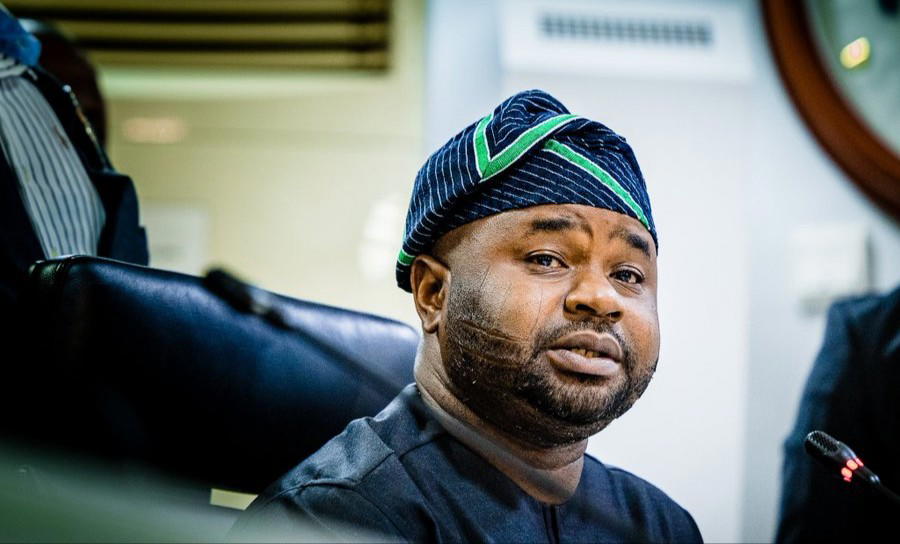
Director-General of City Boy Movement, Hon. Oluwatosin Shoga, in this interview, defends President Bola Tinubu’s economic reforms, saying his government is correcting several years of structural distortions and laying a solid foundation for Nigeria’s emergence as a $1 trillion economy. He also speaks about Nigeria’s growing foreign reserves, proposed Gateway Deep Seaport and increased revenues to state and local governments. Folalumi Alaran brings excerpts. States and local governments are now receiving higher allocations. What should Nigerians expect from them? This is an important aspect of President Bola Tinubu’s reforms that deserves greater attention. By July 2026, monthly federation revenues available for distribution had risen to around N3 trillion. That means more resources are available to states and local governments for infrastructure and public services. Governors and council chairmen must therefore take responsibility for delivering visible improvements in schools, healthcare, rural roads, water supply and agricultural development. It would be unfair to attribute every difficulty in local communities exclusively to the President when subnational governments now have greater resources and constitutional responsibilities. President Tinubu is creating additional fiscal opportunities. States and local governments must demonstrate what they are doing with them. Citizens deserve accountability at every level. How can the administration ensure that development reaches every geopolitical zone? President Tinubu’s vision must be understood as a national development agenda. Every zone possesses economic advantages. The North-Central has agriculture, minerals and logistics; the North-East has livestock, agriculture and cross-border commerce; while the North-West has textiles, leather and food processing. The South-East possesses formidable entrepreneurial and manufacturing capacity. The South-South offers petroleum, gas, petrochemicals and maritime industries, while the South-West remains strong in finance, manufacturing, technology and aviation. The administration’s challenge is connecting these strengths through transportation, electricity, industrial infrastructure and digital development. A genuinely prosperous Nigeria cannot leave any geopolitical zone behind. You are enthusiastic about President Tinubu’s economic achievements, yet millions of Nigerians are struggling. How do you reconcile this? We must be fair to President Tinubu and honest about the condition of the economy he inherited. Nobody disputes that Nigerians have experienced hardship. Fuel prices increased, transportation became more expensive, food prices rose and household purchasing power suffered. But the fundamental question is whether Nigeria could have continued indefinitely with the economic arrangements that created those problems. President Tinubu inherited an economy burdened by unsustainable fuel subsidies, distorted foreign-exchange arrangements, weak government revenues, enormous debt-servicing obligations and infrastructure deficiencies. These were not problems created overnight, and they could not be solved through political convenience. What distinguishes President Tinubu is his willingness to confront challenges that had been postponed for years. Leadership sometimes demands taking difficult decisions today to prevent a much bigger crisis tomorrow. The encouraging development is that the reforms are beginning to produce measurable results. Our responsibility now is to ensure those gains translate into jobs, affordable transportation, stronger businesses and improved living conditions. What concrete evidence supports your claim that the economy is recovering? The figures are increasingly speaking for themselves. Nigeria’s real Gross Domestic Product grew by 4.43 per cent in the second quarter of 2026, compared with 4.23 per cent in the corresponding period of 2025. That represents progress in an economy undergoing substantial structural adjustment. We are seeing improvements in revenue mobilisation, foreign reserves, domestic refining and investment opportunities. Critics should acknowledge that these developments are occurring because the administration chose reform over the temporary comfort of maintaining an unsustainable system. Of course, GDP growth alone is insufficient. But you cannot create sustainable prosperity without first building a productive and stable economy. President Tinubu is laying that foundation, and the next task is translating growth into employment, industrial expansion and stronger purchasing power. Why does the Dangote Refinery feature so prominently in your assessment? Because it illustrates the industrial transformation Nigeria desperately needs. For decades, we produced crude oil, exported it and spent enormous foreign exchange importing refined petroleum produc
Don't miss out on breaking stories and in-depth articles.